
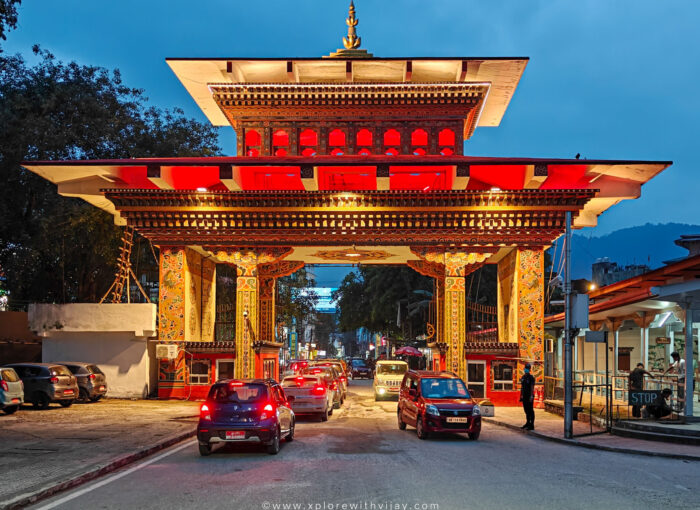
Bhutan Travel Series – Part 1 of 4: From India to the Himalayan Kingdom
The Journey Begins | Chennai to the Himalayan Kingdom
It was a beautiful Sunday morning in April. There is something about the April mornings that I particularly love. The transition from late winter to early summer brings with it a certain warmth, and the morning sunshine during this period is simply beautiful. If only we could take the humidity out of the equation, it would be nothing short of perfect!
There was also a wave of excitement as my wife and I set out on our first international trip of the year. I had deliberately planned this trip to coincide with our fifth wedding anniversary, making it all the more special.
One of the things I particularly enjoy about air travel is the little bit of pampering that comes with access to exclusive airport facilities. Having experienced this on several occasions, it was nothing new to me. But for her, it was a first, and I could see the excitement! It was lovely watching her enjoy the experience, and it made the start of our holiday all the more special.
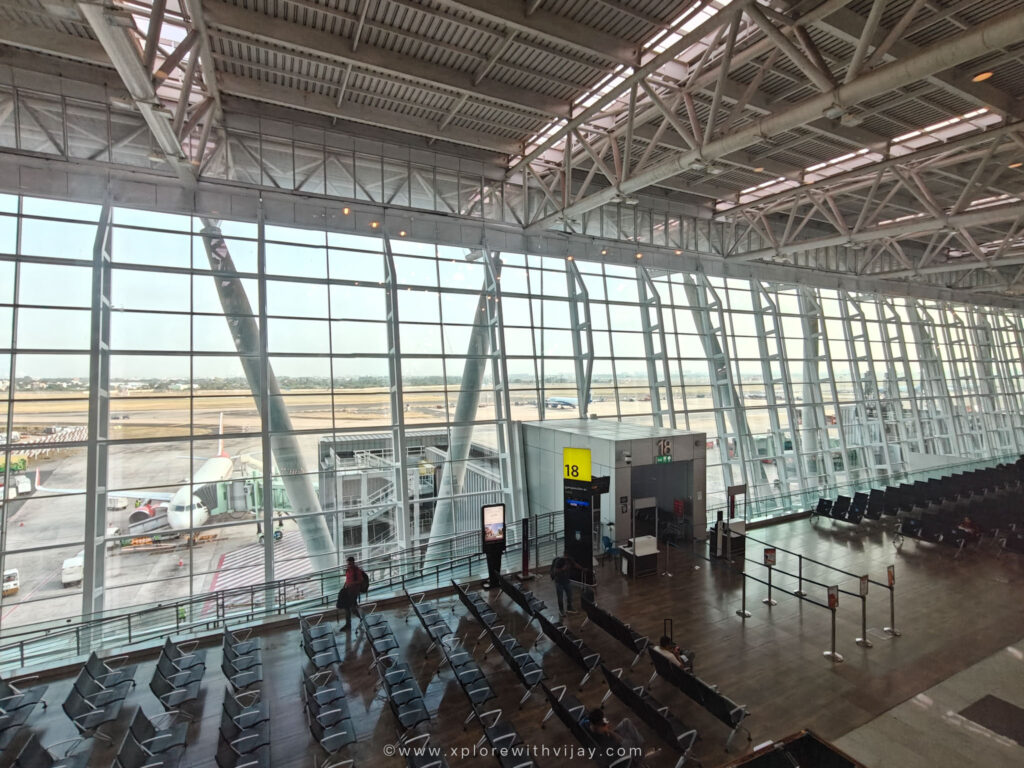
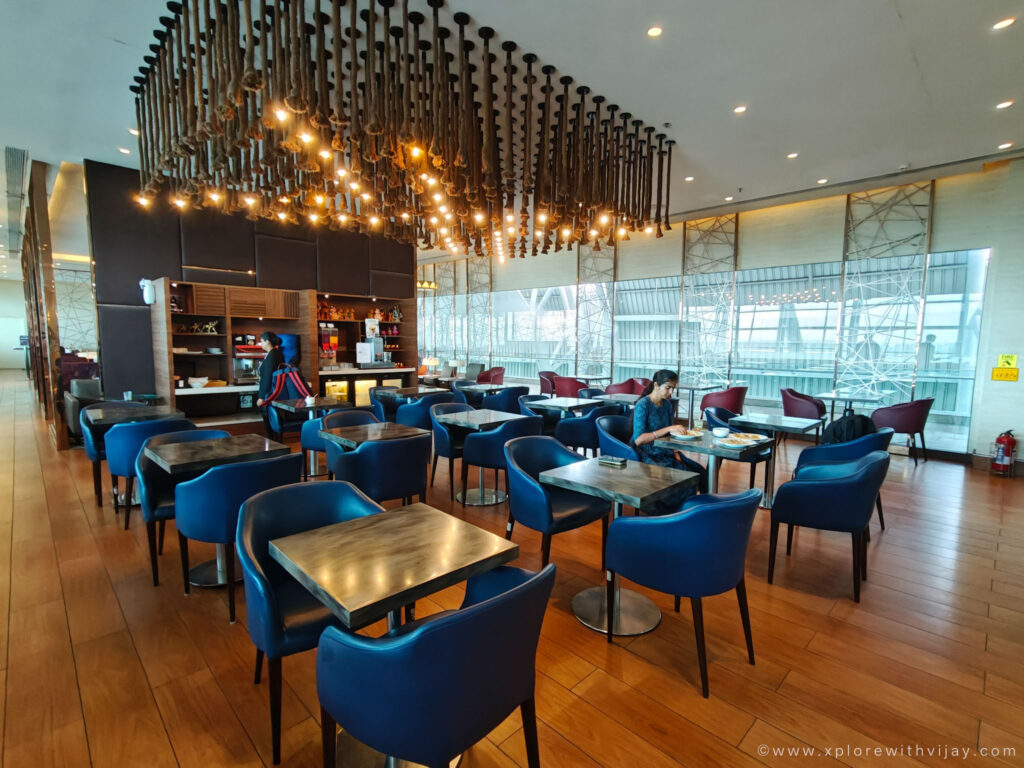
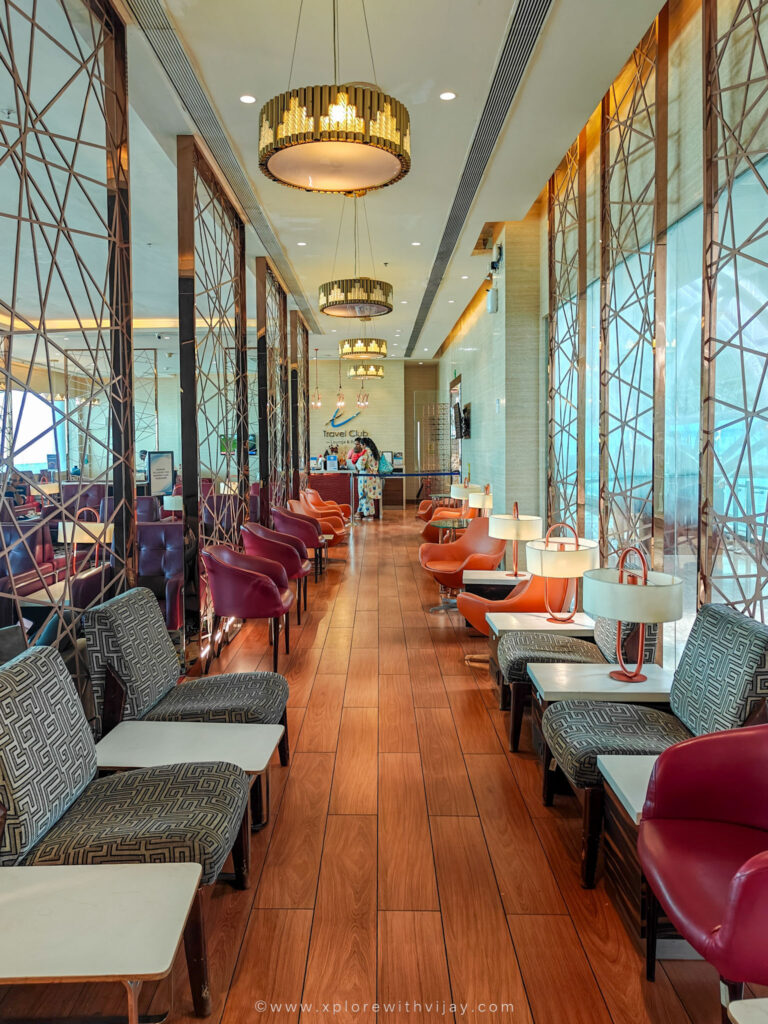
Before boarding our flight, we treated ourselves to a sumptuous breakfast at Chennai Airport, surrounded by some rather pretty views. With a plethora of options to choose from, there was no shortage of choices. And, of course, no South Indian breakfast is complete without a typical filter coffee to go with it!
Leaving behind the hot and humid tropical weather of Chennai, we were heading towards the Himalayan terrains of a neighbouring country. As always, the idea was not to rush through the journey but to savour the experiences along the way.

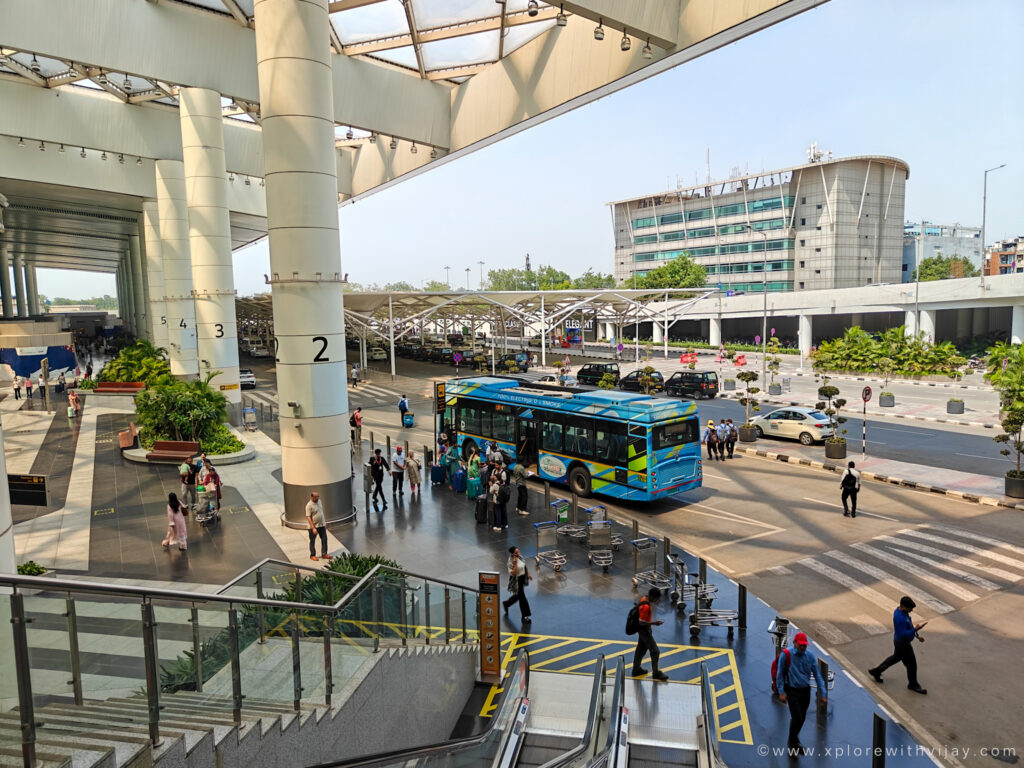
After a delightful flight from Chennai, we landed at Bagdogra Airport, the gateway to the North Bengal region. We then made our way to Siliguri, where we spent the night before beginning our road journey into Bhutan the following morning.
Crossing Borders | First Impressions of Bhutan
The next morning, our journey began towards the international border of a country that offers familiar Himalayan landscapes, much like those found in India, yet has a distinctly different approach to preserving its surroundings, traditions and cultural identity.
Bhutan, a Himalayan kingdom nestled between India and China, has managed to retain much of its cultural identity while embracing the modern world.
The drive from Siliguri to Jaigaon took us through the picturesque Dooars belt of North Bengal. This region is also an important road corridor towards Bhutan and the northeastern parts of India. Interestingly, the India–Bangladesh international border at Fulbari is just a few kilometres from Siliguri. In fact, we were travelling through a part of the country where international borders with multiple neighbouring countries are never too far away!
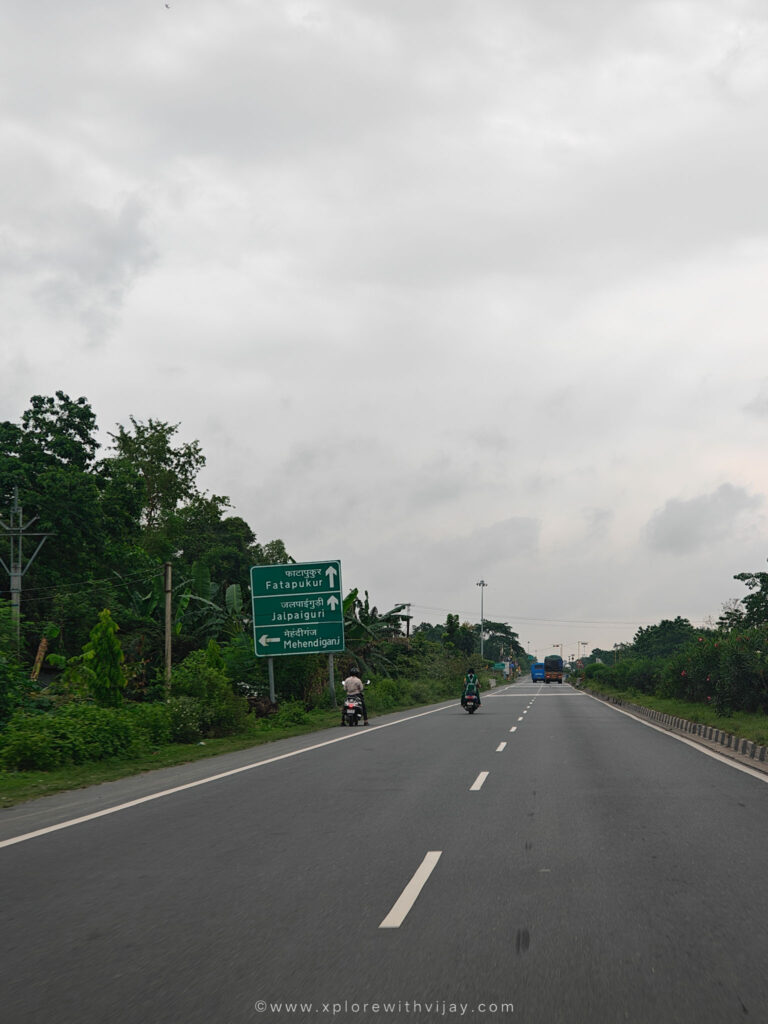
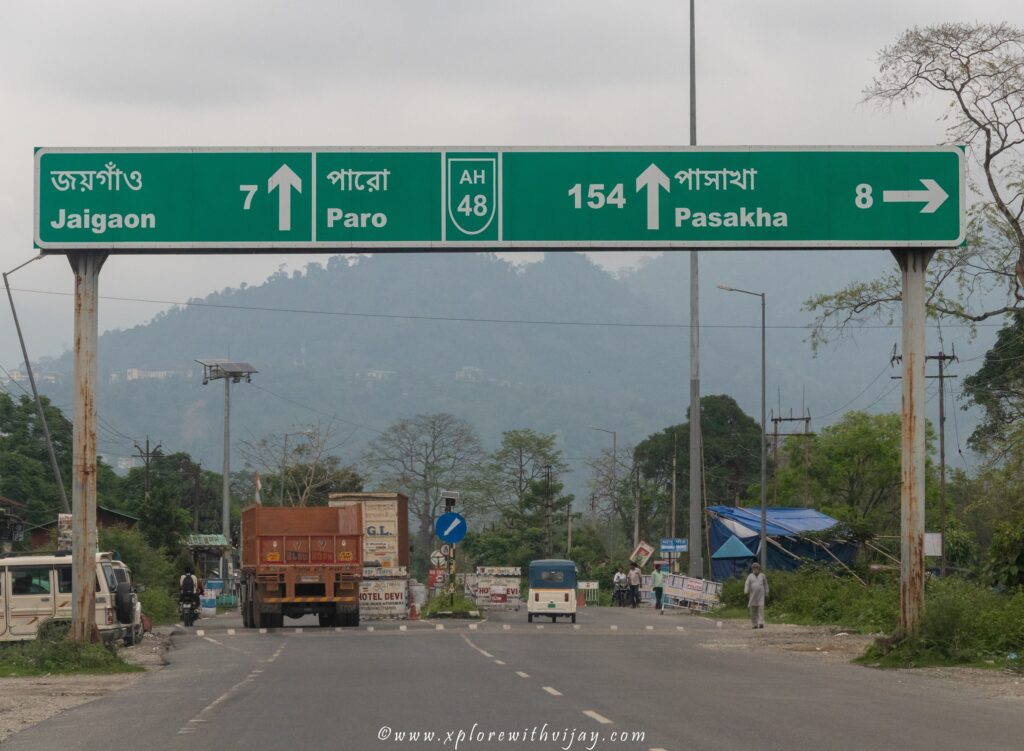
The road itself was quite an experience. Much of the stretch was surprisingly narrow, considering its importance as a connecting route to the neighbouring regions. One of the interesting things I learnt was the origin of the name ‘Dooars’. Derived from the word ‘doors’ or ‘doorways’, the region historically served as a gateway to Bhutan through several mountain passes.
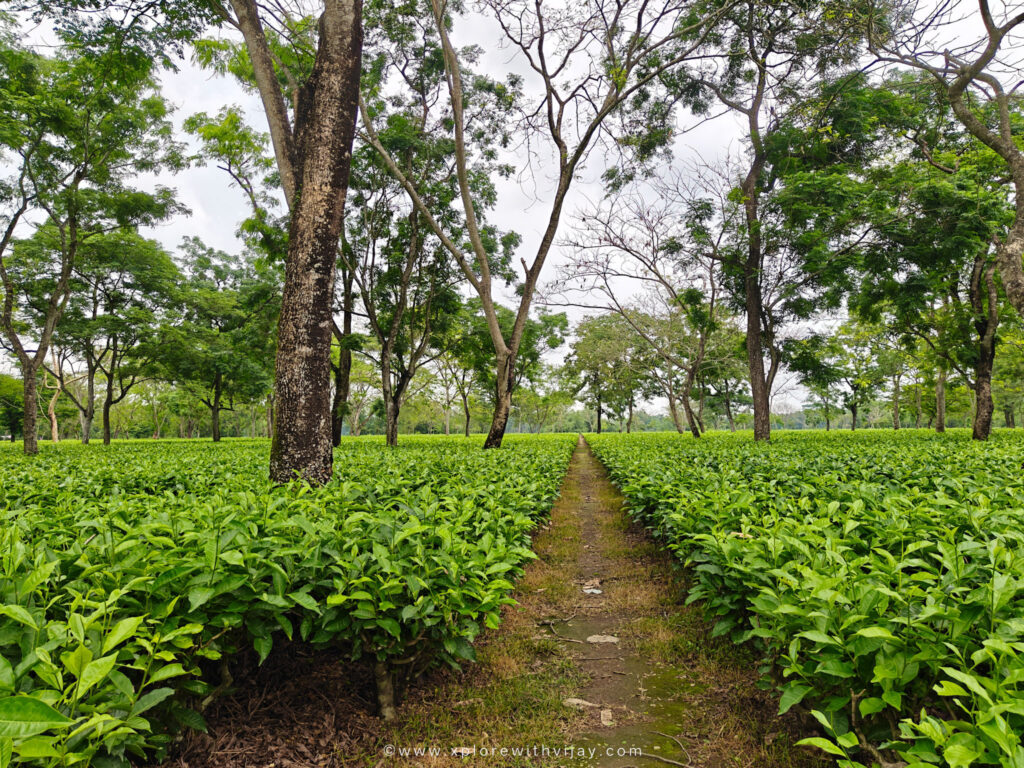
The landscape was equally fascinating. The Dooars region is characterised by vast tea estates, dense forests, meandering rivers and small settlements, all set against the foothills of the Eastern Himalayas. It is also home to several wildlife reserves and national parks, including Jaldapara and Gorumara.
One thing that was particularly hard to miss along the way was the sheer expanse of tea gardens. Mile after mile, endless stretches of neatly manicured tea bushes carpeted the landscape. As a photographer, there was simply no way I was going to pass through such a landscape without stopping to capture a few frames. Some journeys are as much about the road as they are about the destination, and this was certainly one of them!
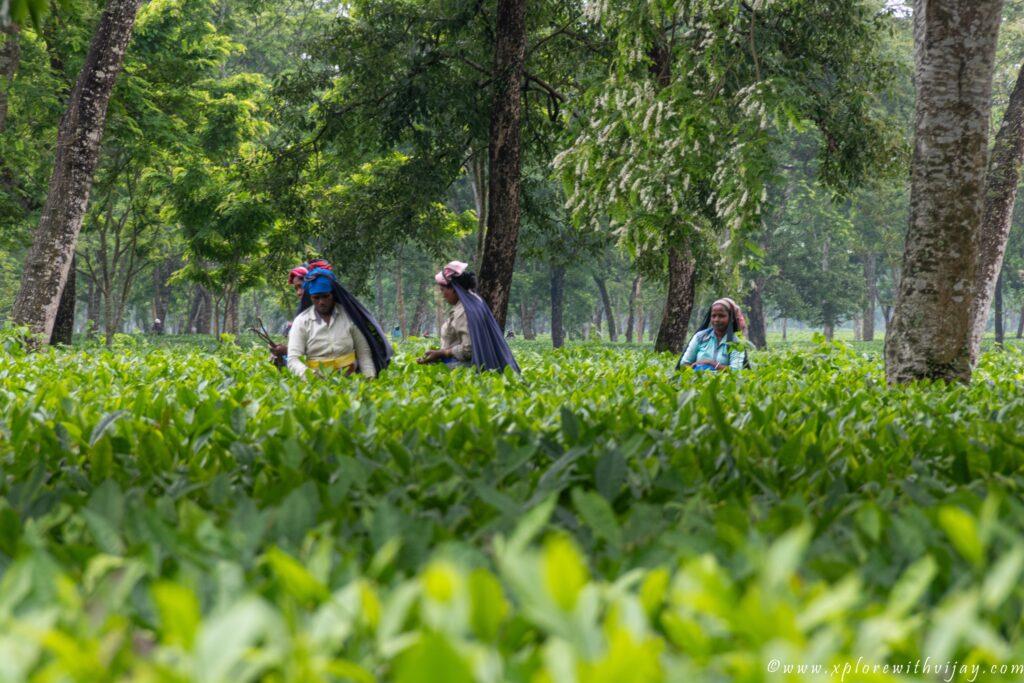
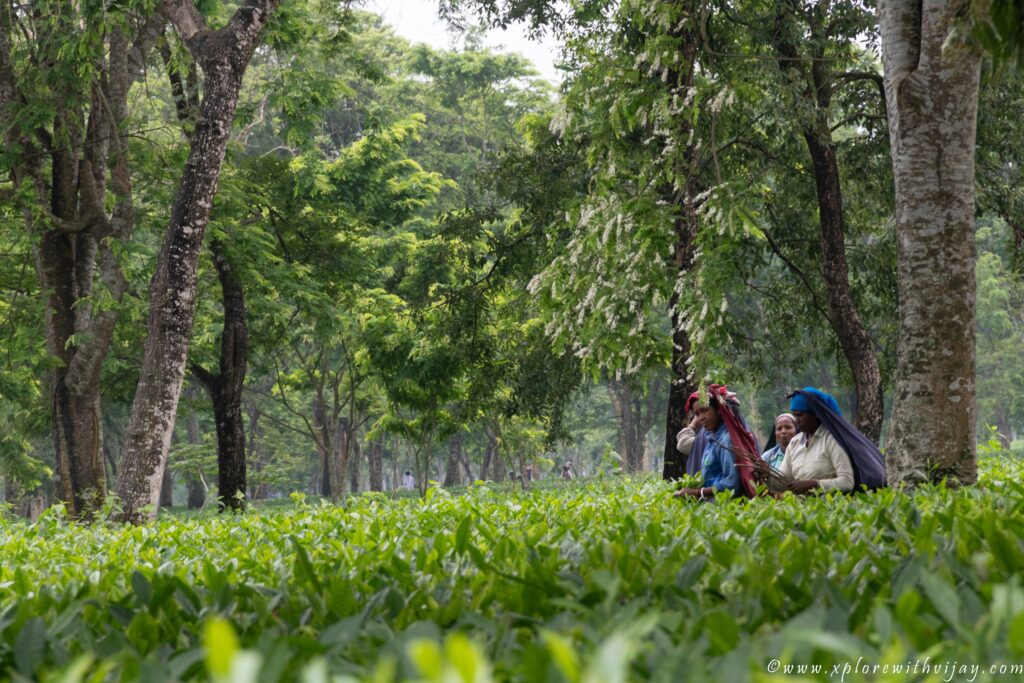
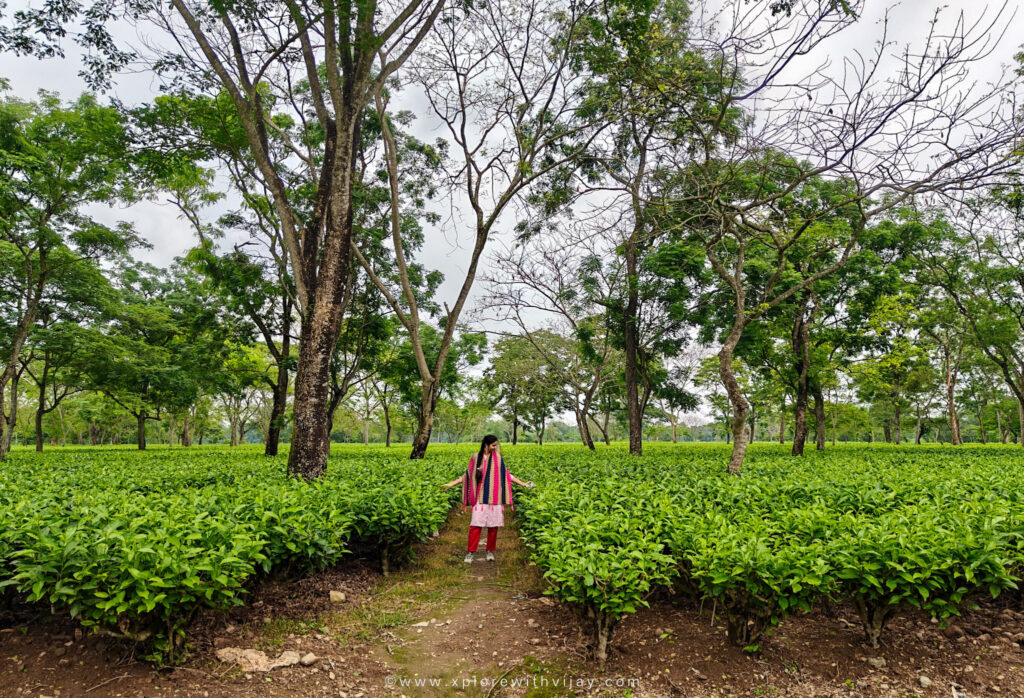
A three-hour drive was all it took to reach the border checkpoint between the two countries. Our guide for the trip was already waiting for us on the Indian side of the border.
Phuentsholing | Where India Meets Bhutan
The immigration process was a breeze from start to finish. The formalities were over before we knew it! The moment we stepped out of the immigration building, the striking difference in the cleanliness of the surroundings was hard to miss.
We were then driven to our hotel in Phuentsholing, the Bhutanese town right across the Indian border. The hotel overlooked the Torsa River, and the view was quite a sight.
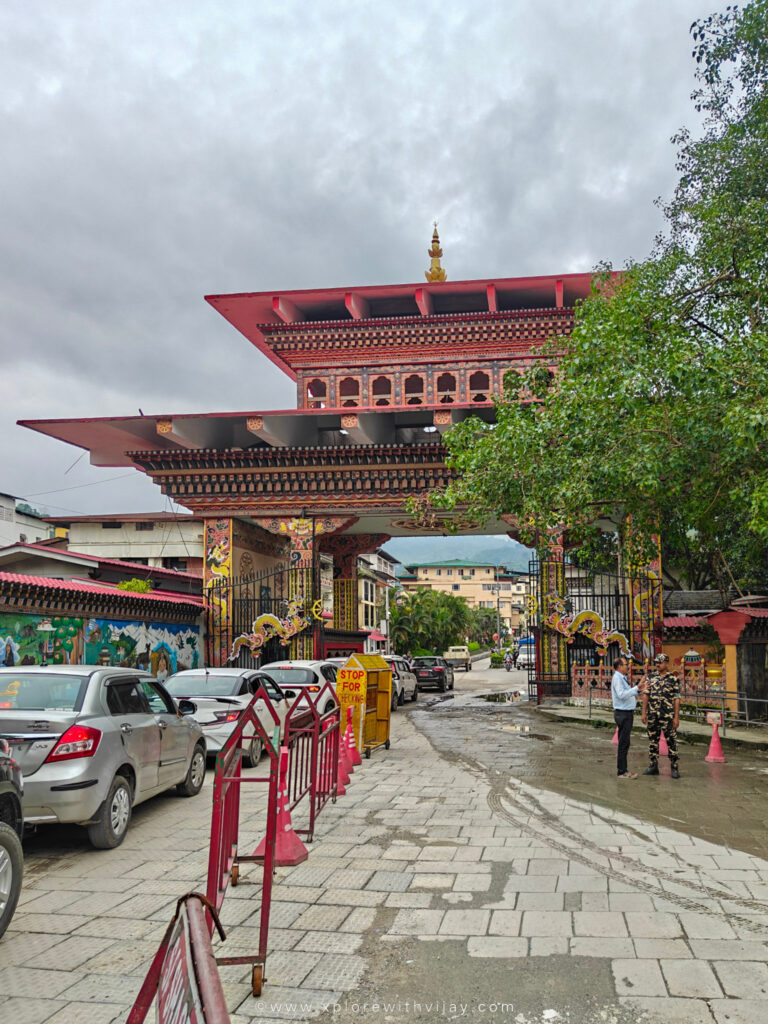
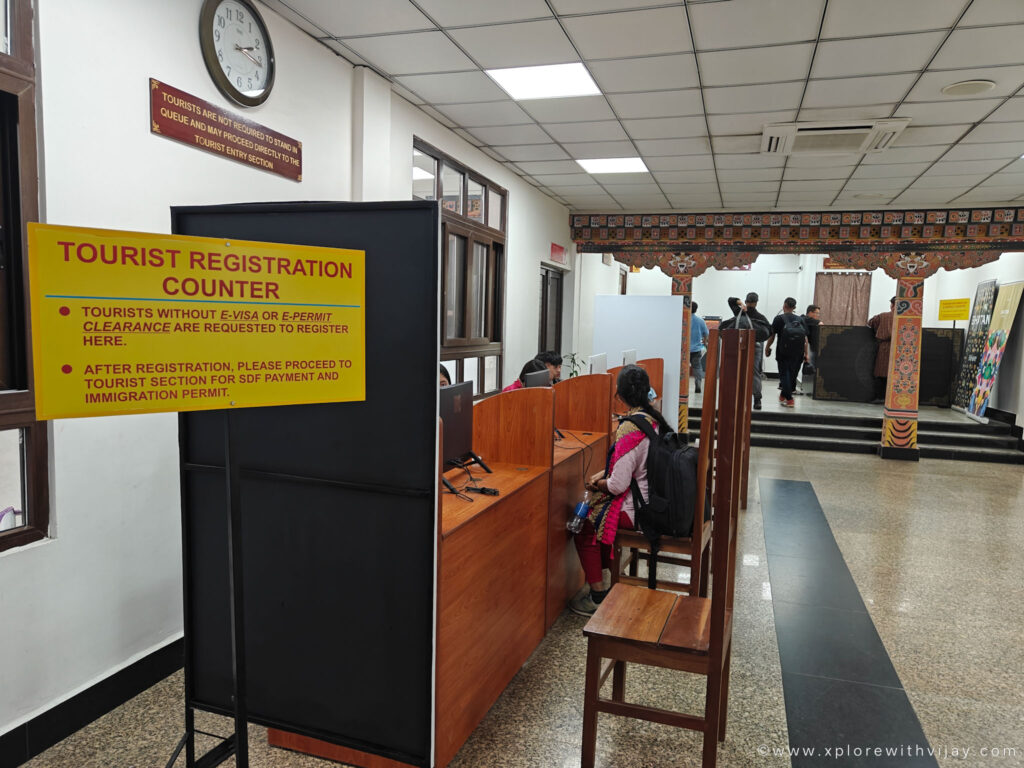
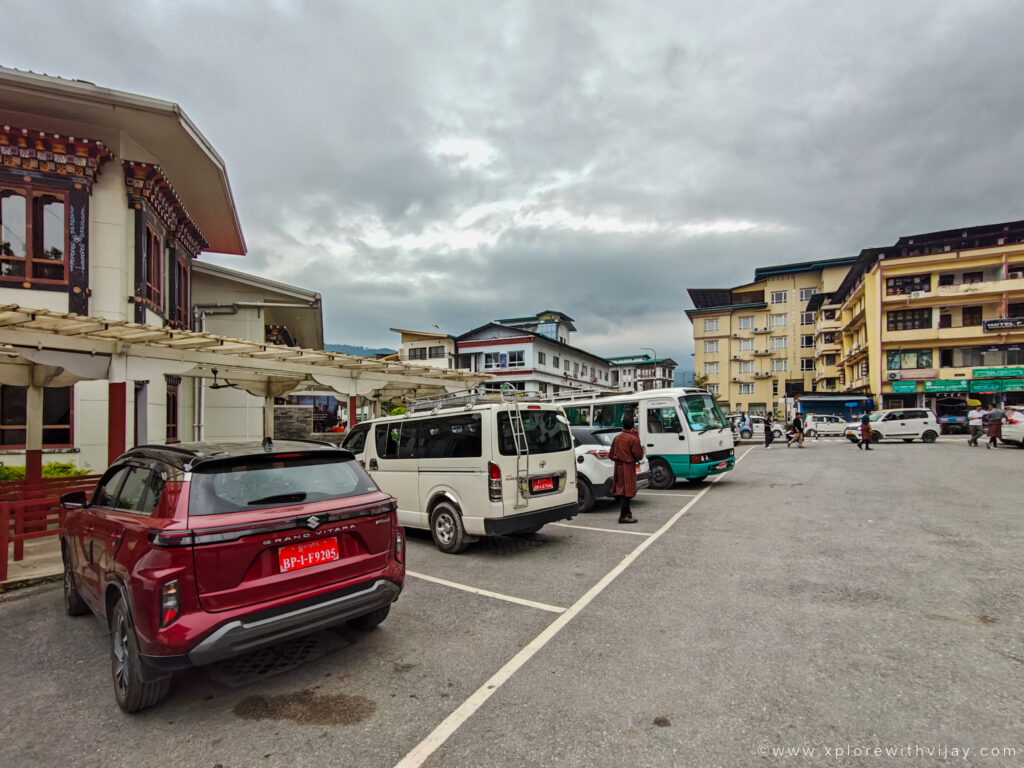
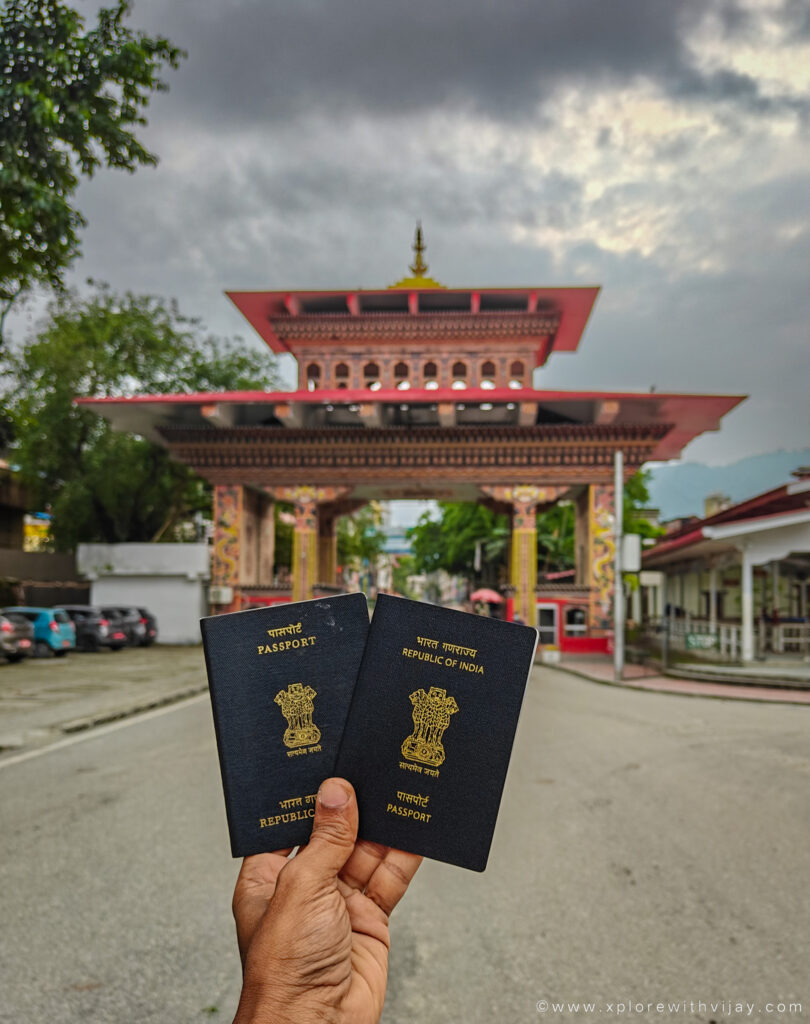
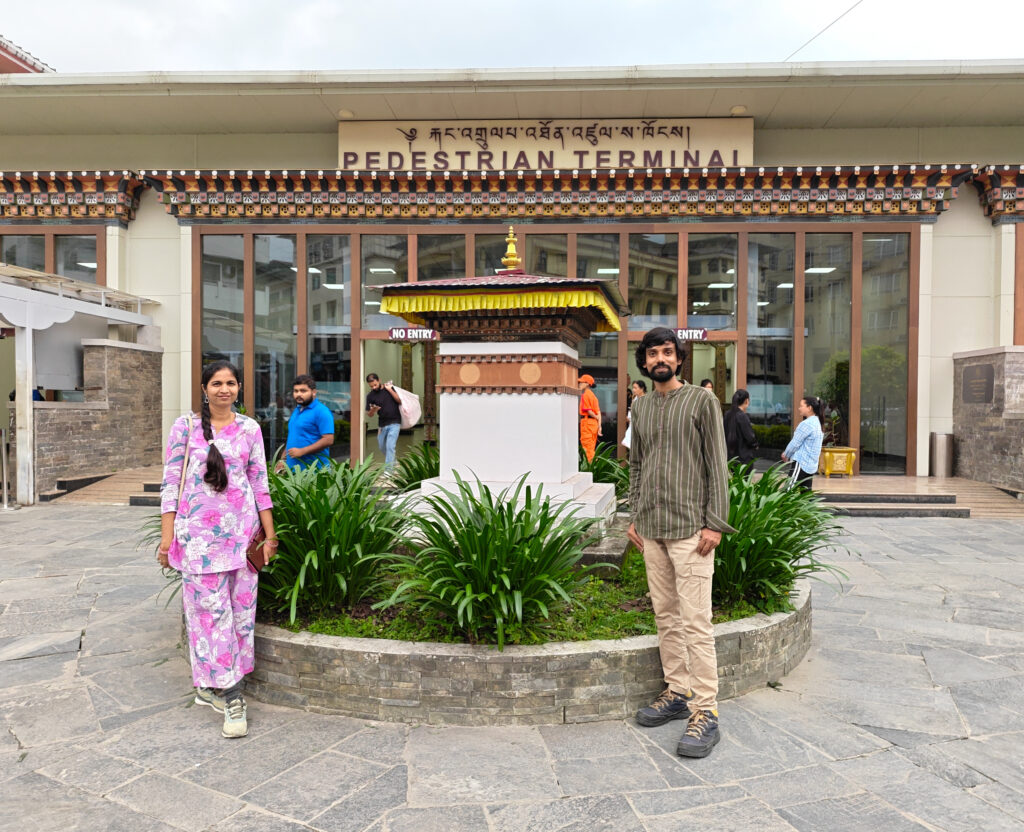
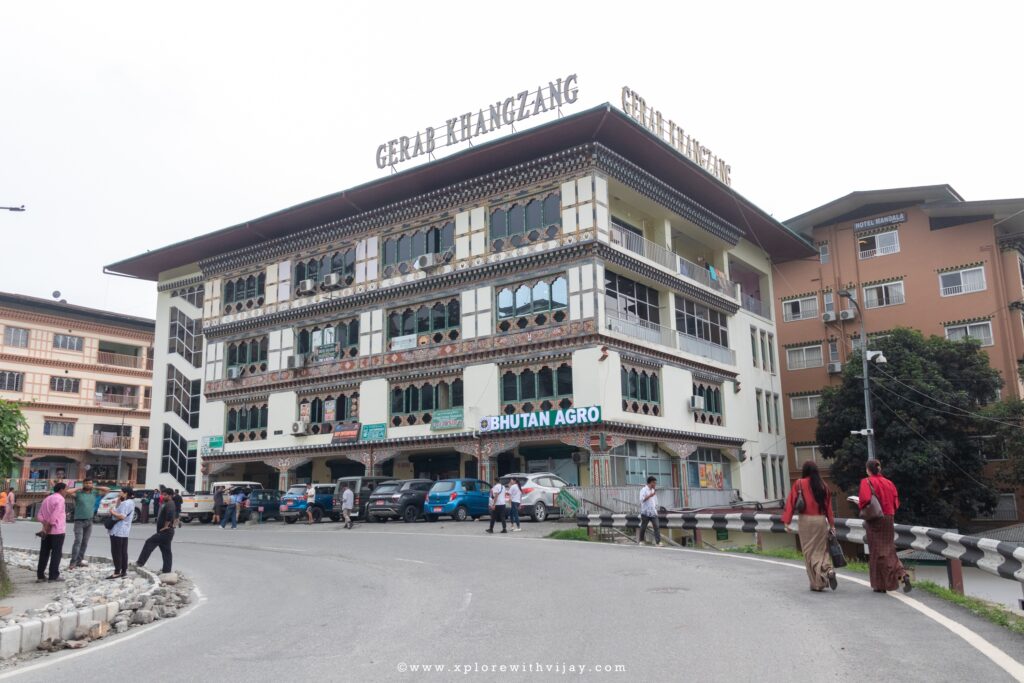
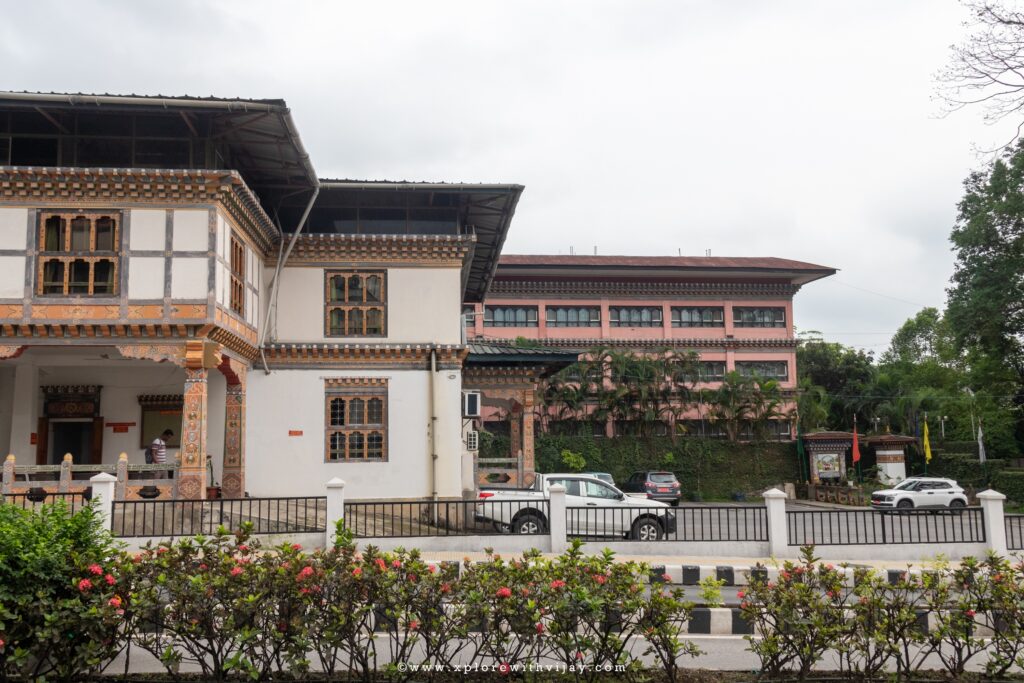
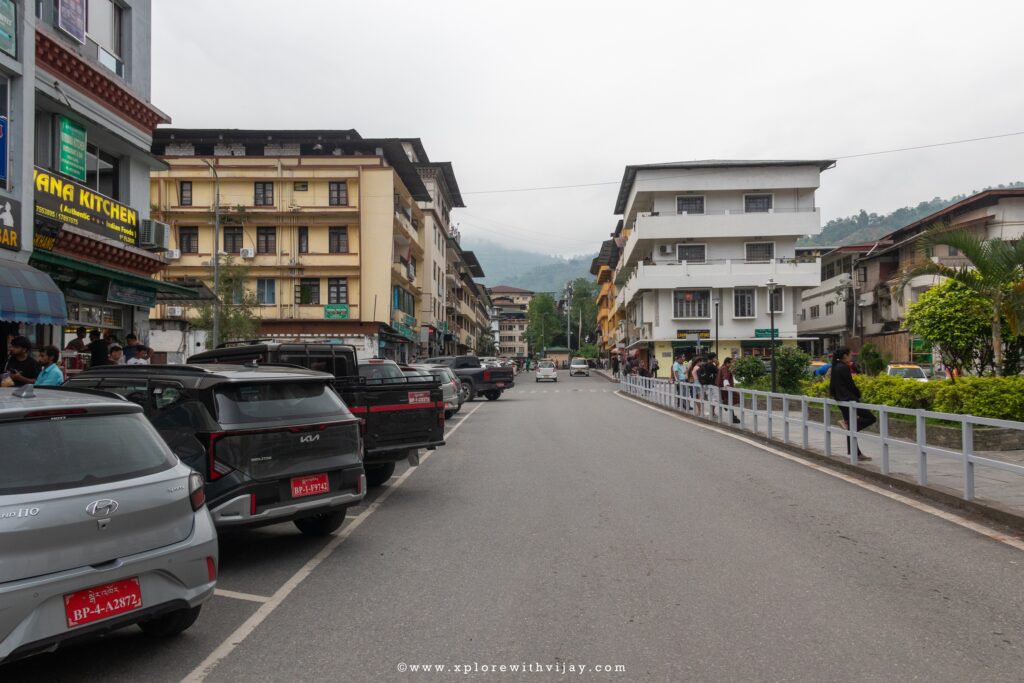
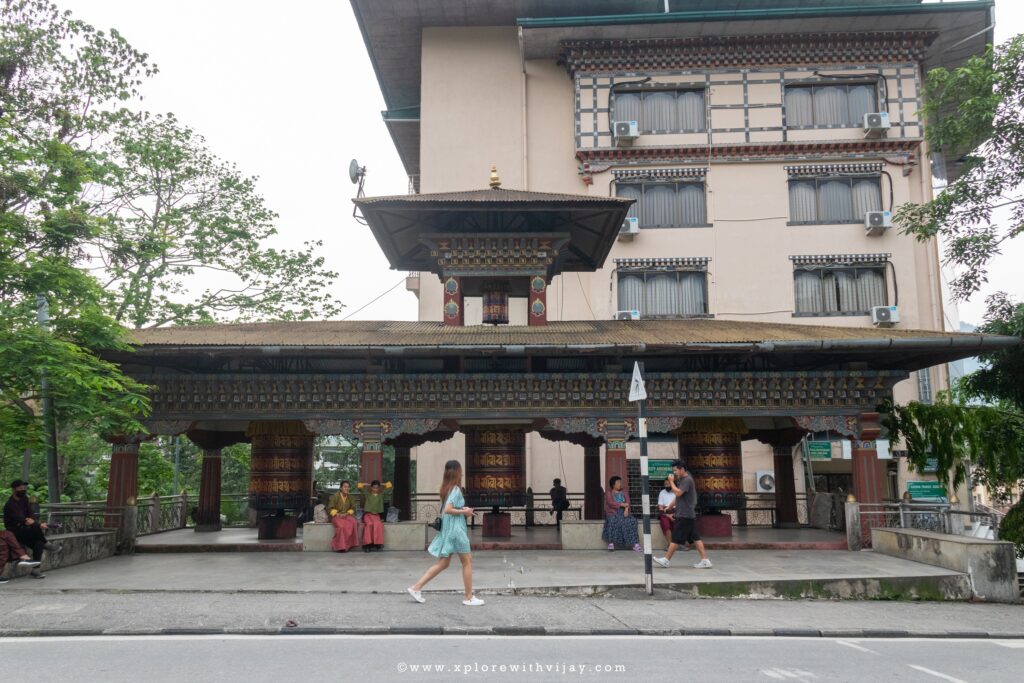
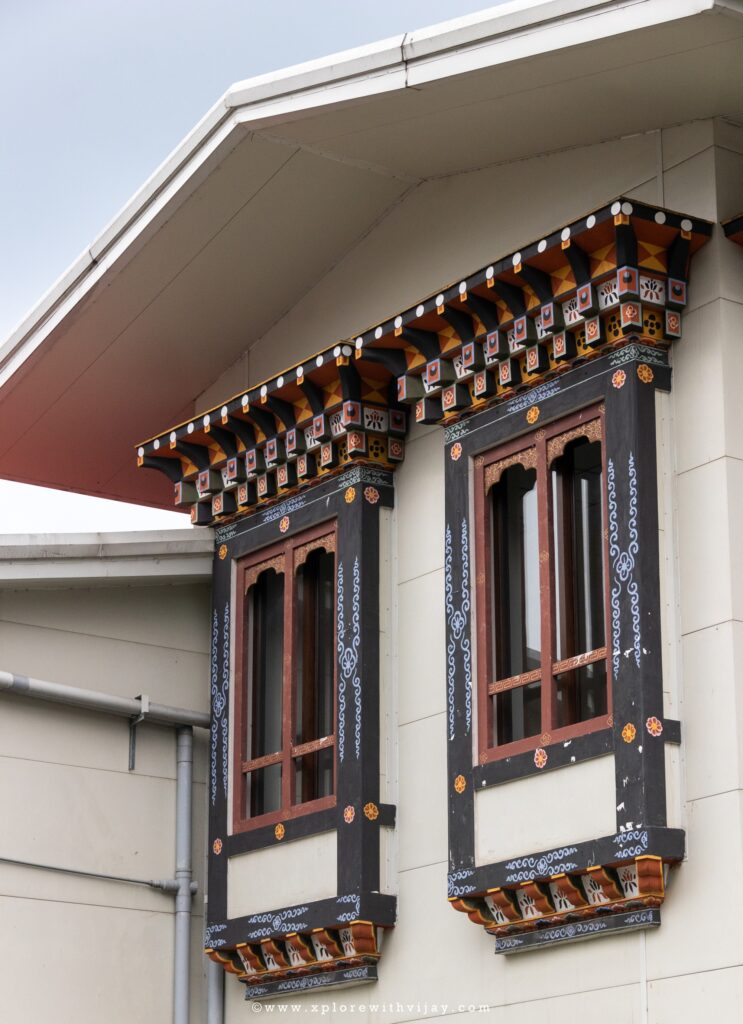
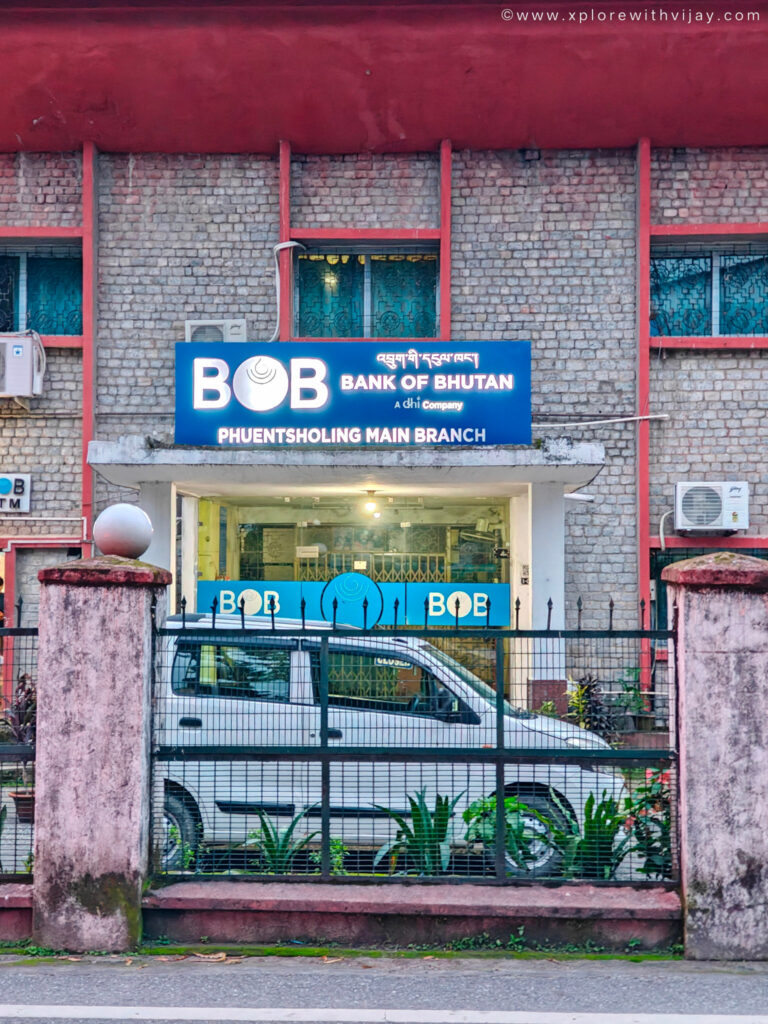
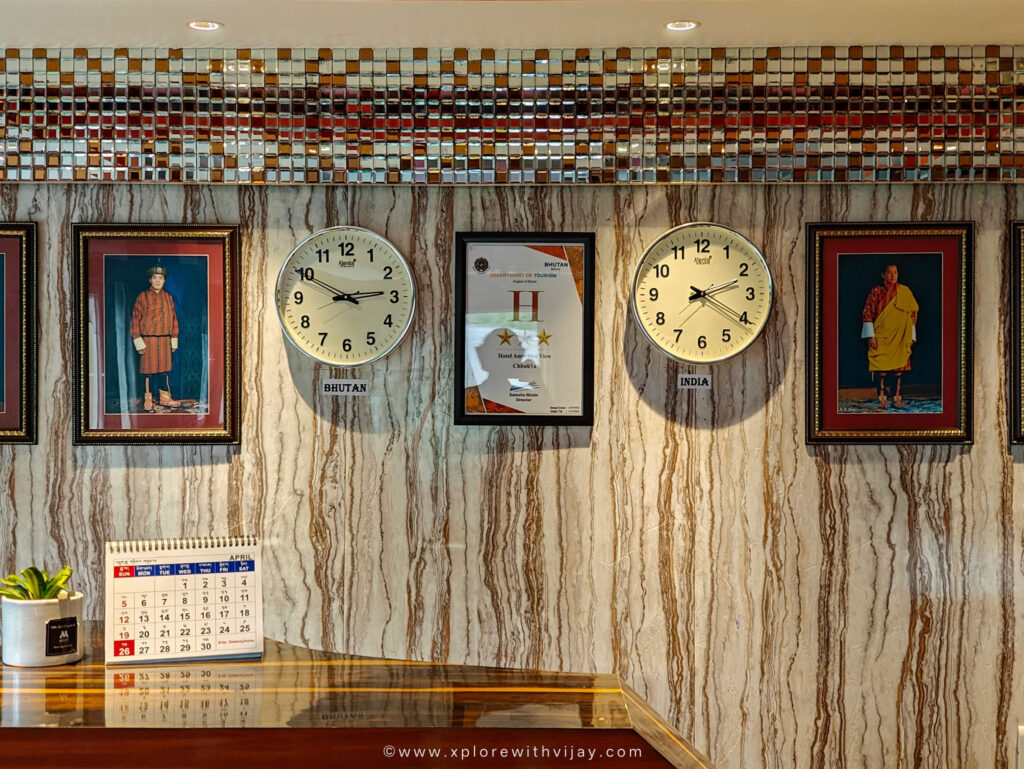
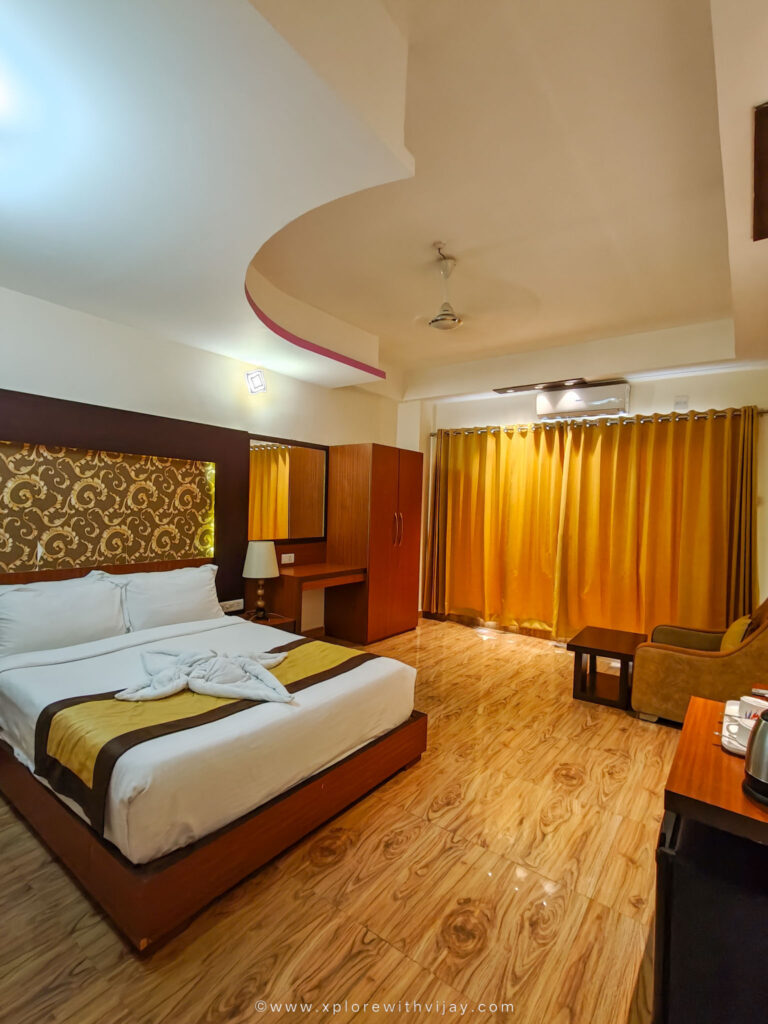
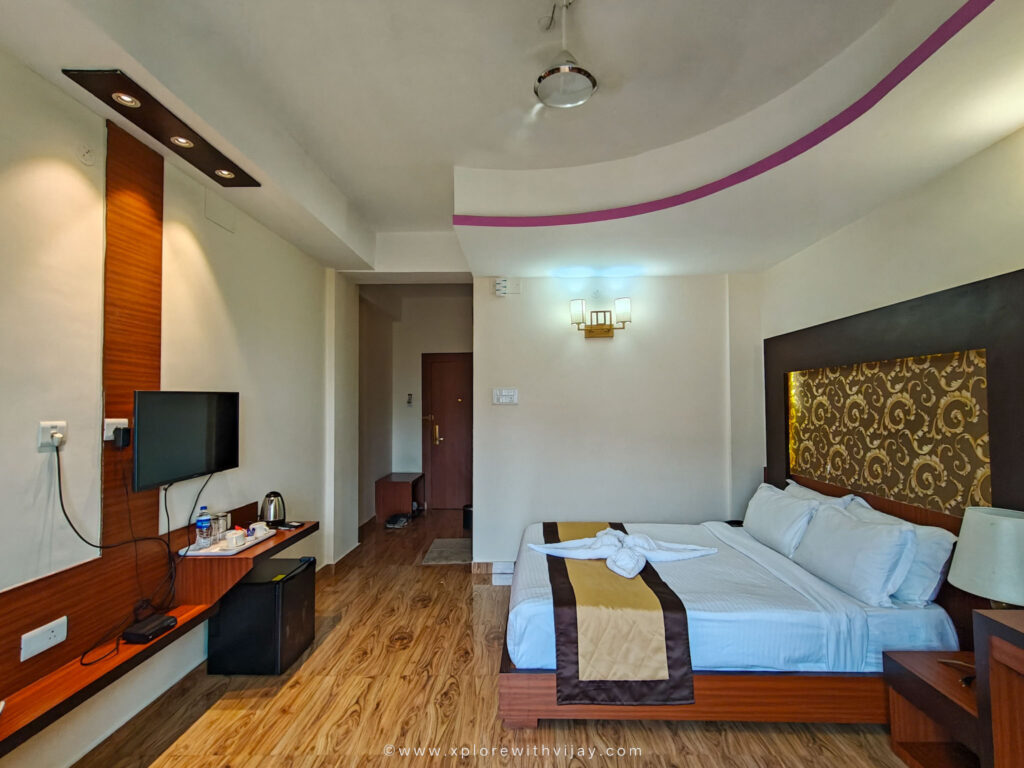
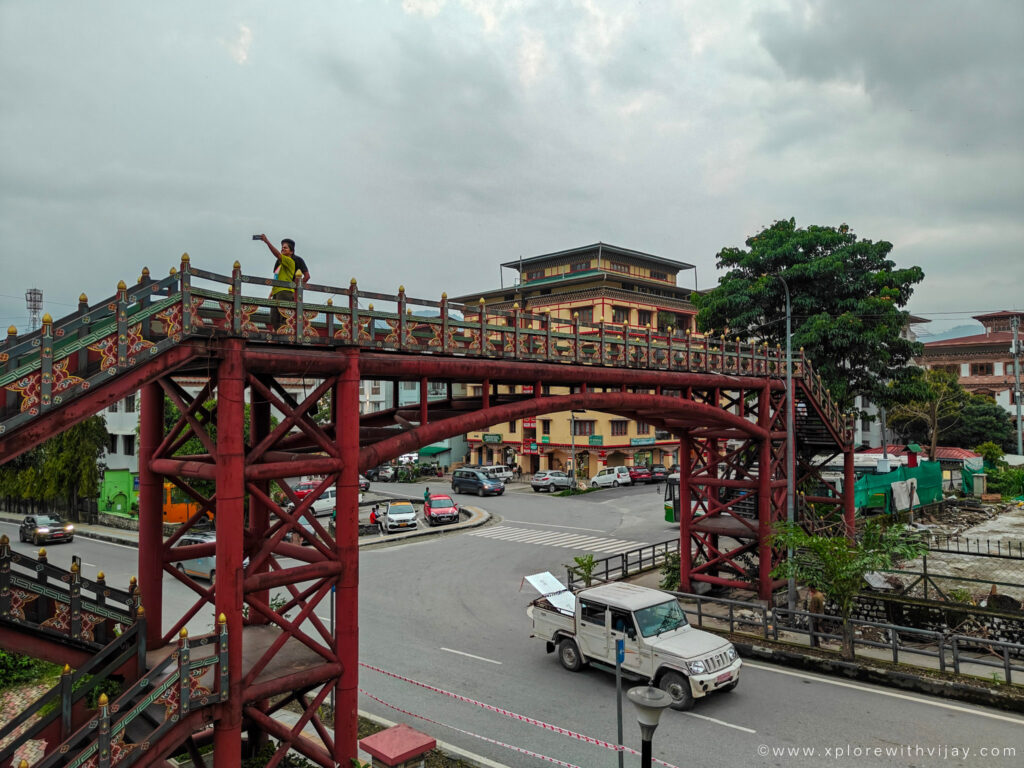
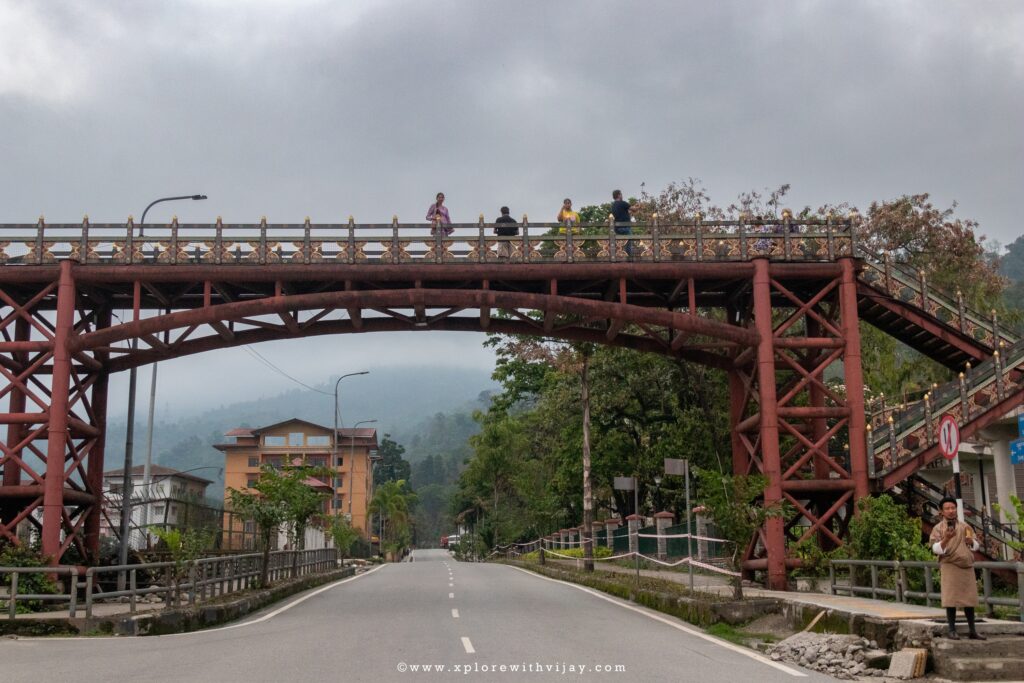
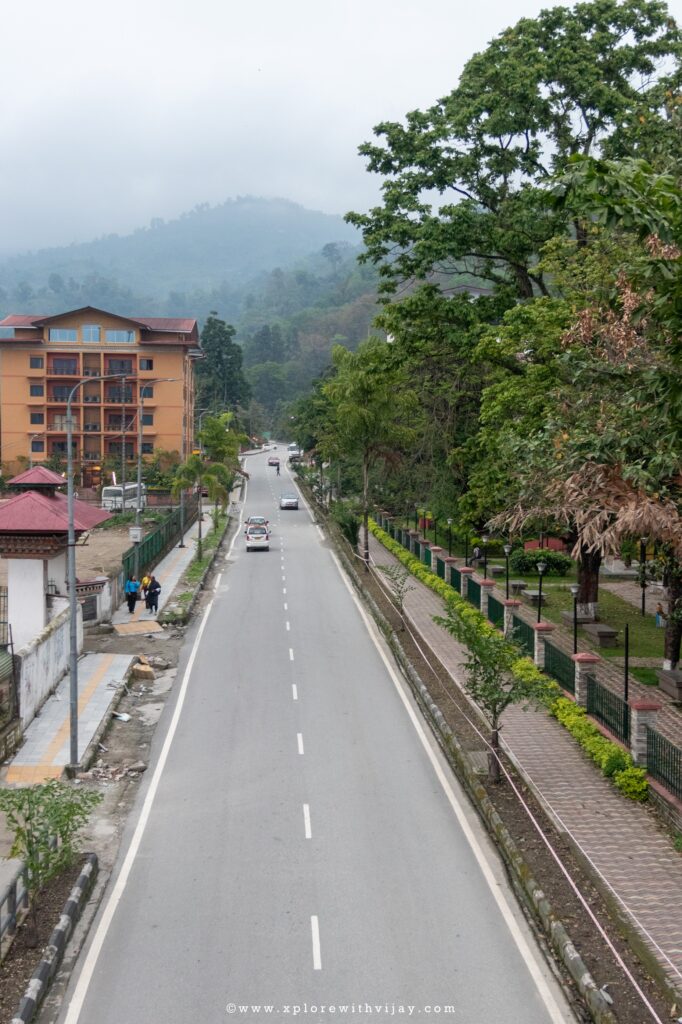
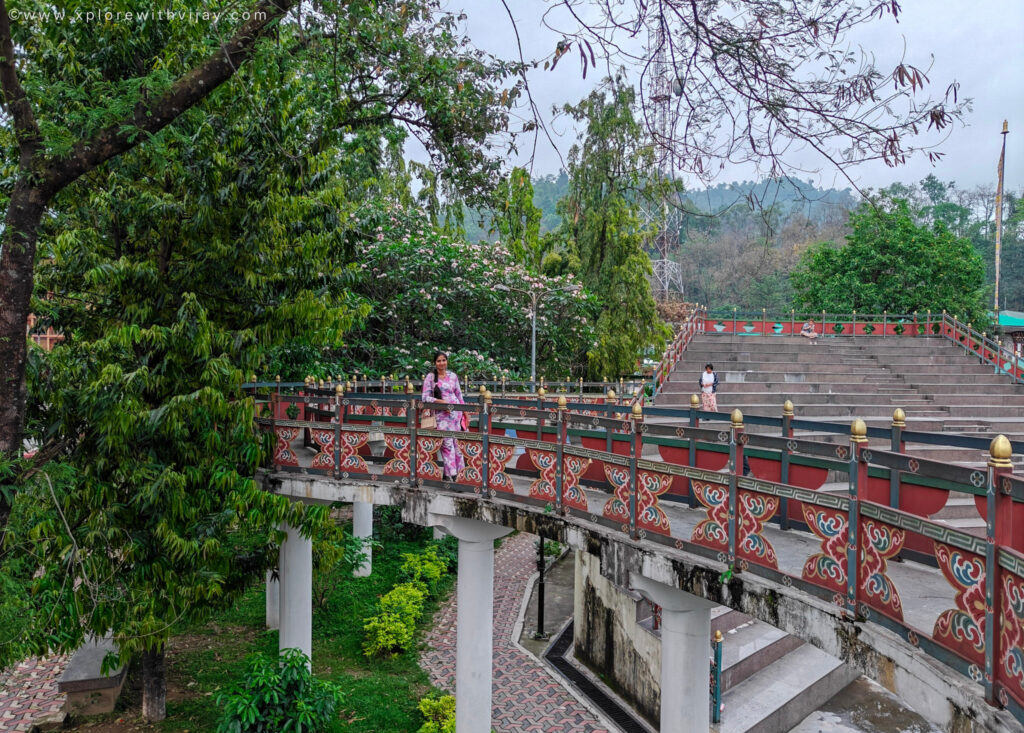
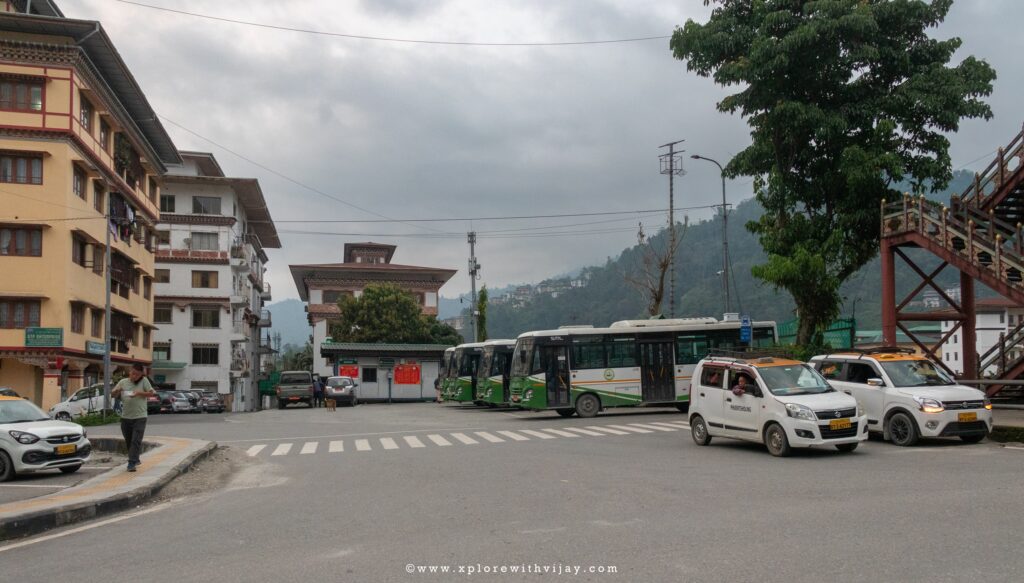
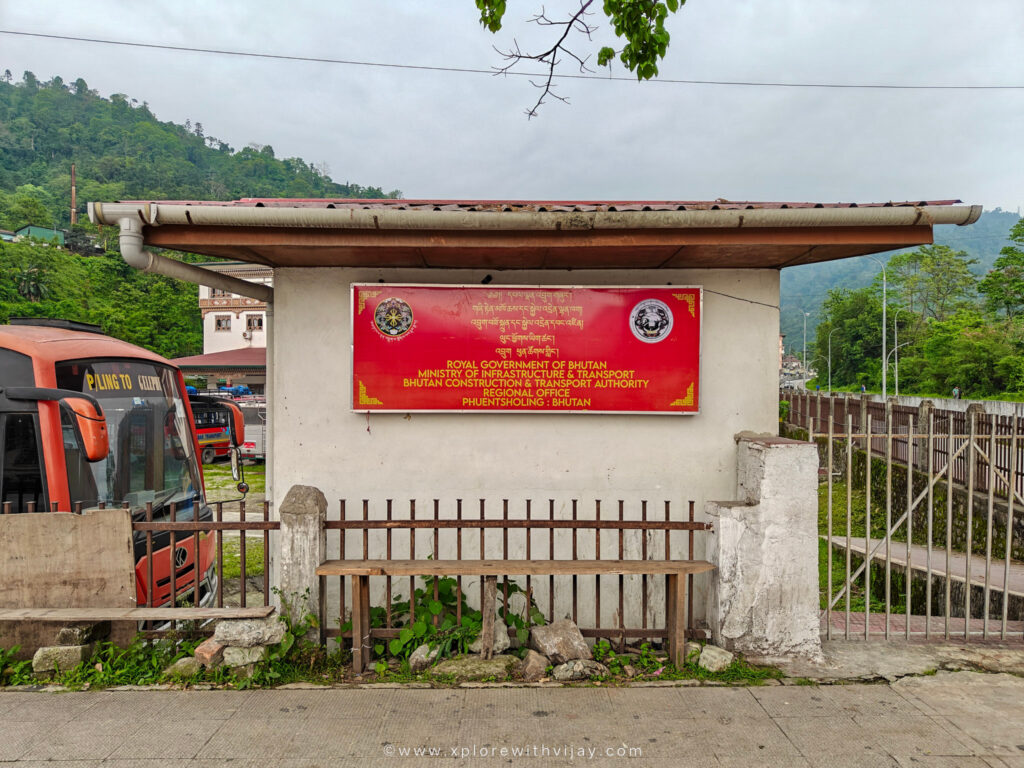
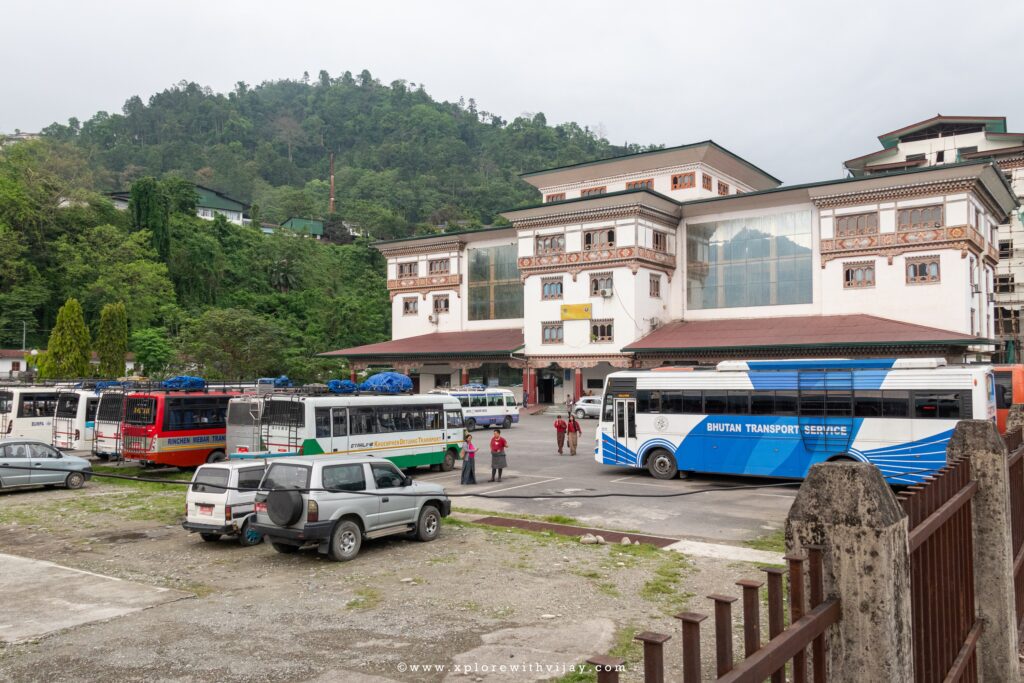
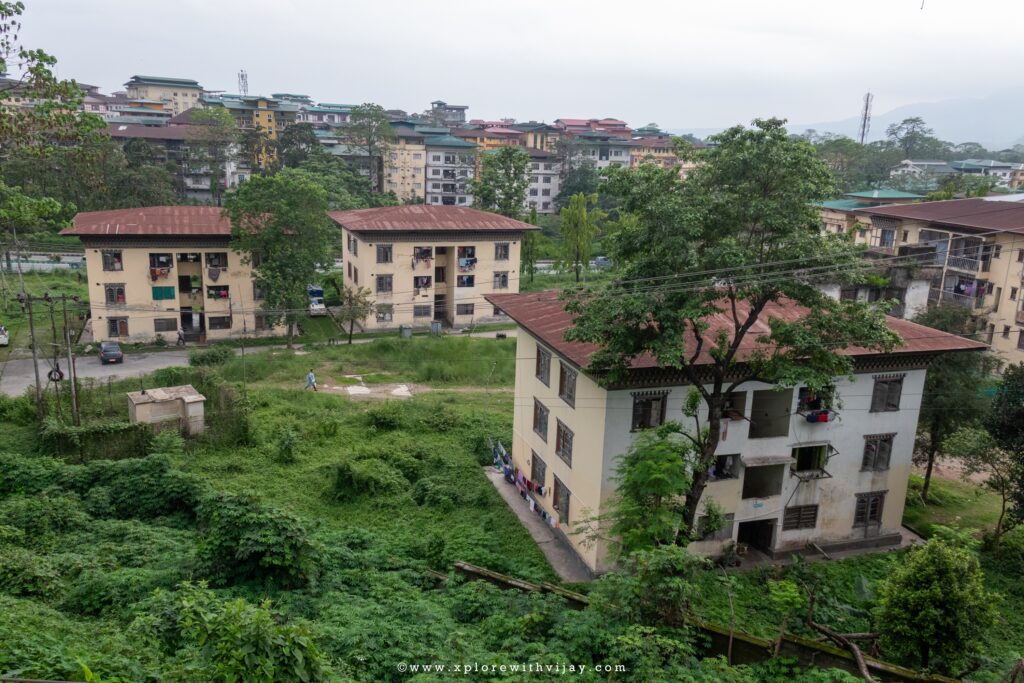
With no particular plans for the rest of the day, we spent our time leisurely exploring this quaint border town. The buildings, the well-maintained roads and, of course, the local food kept us occupied. It was a relaxed introduction to Bhutan, with plenty of time to soak in the surroundings.
Legends, Landscapes and Sacred Space | The Journey to Thimphu
It was time to venture further into the Himalayan kingdom. It was going to be a long day on the road, something both of us aren’t particularly fond of. Fortunately, it wasn’t going to be a continuous drive, as there were a few interesting stops along the way before reaching our destination for the day, Thimphu.
About 30 minutes into our drive from Phuentsholing, we arrived at Sangye Migyur Ling Lhakhang, also known as Milarepa Lhakhang. This imposing, multi-storeyed structure is a replica of the legendary nine-storey tower associated with the Tibetan Buddhist saint Milarepa.
Milarepa Lhakhang | A Tale of Transformation and Devotion
More than just an architectural landmark, the structure has deep spiritual significance. To understand why, we had to listen to the fascinating story of Milarepa and his spiritual journey.
Here’s where the real value of having a knowledgeable local guide comes into the picture. I have tried my best to recollect the narration as shared by our guide.
Milarepa was a Tibetan poet, yogi and Buddhist saint who, in his early years, had learnt black magic to take revenge on those who had wronged his family. Having realised the consequences of his actions, he eventually sought spiritual redemption and became a disciple of the renowned Buddhist master Marpa, also known as Marpa the Translator.
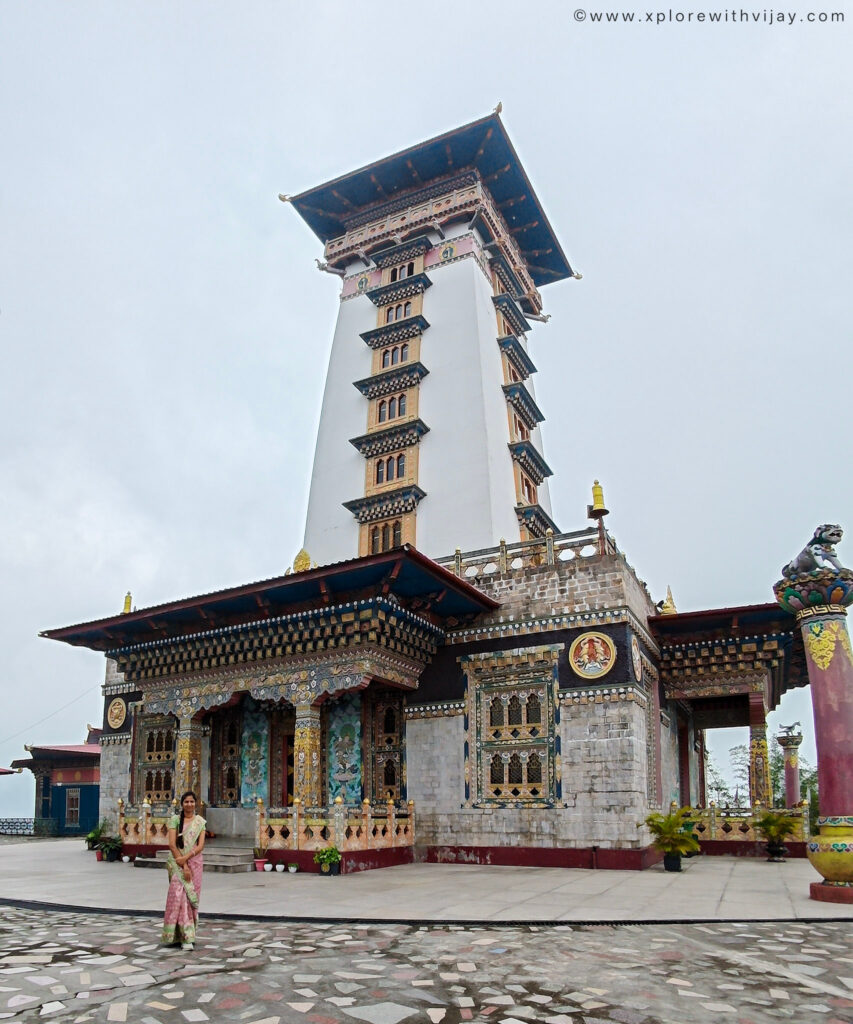
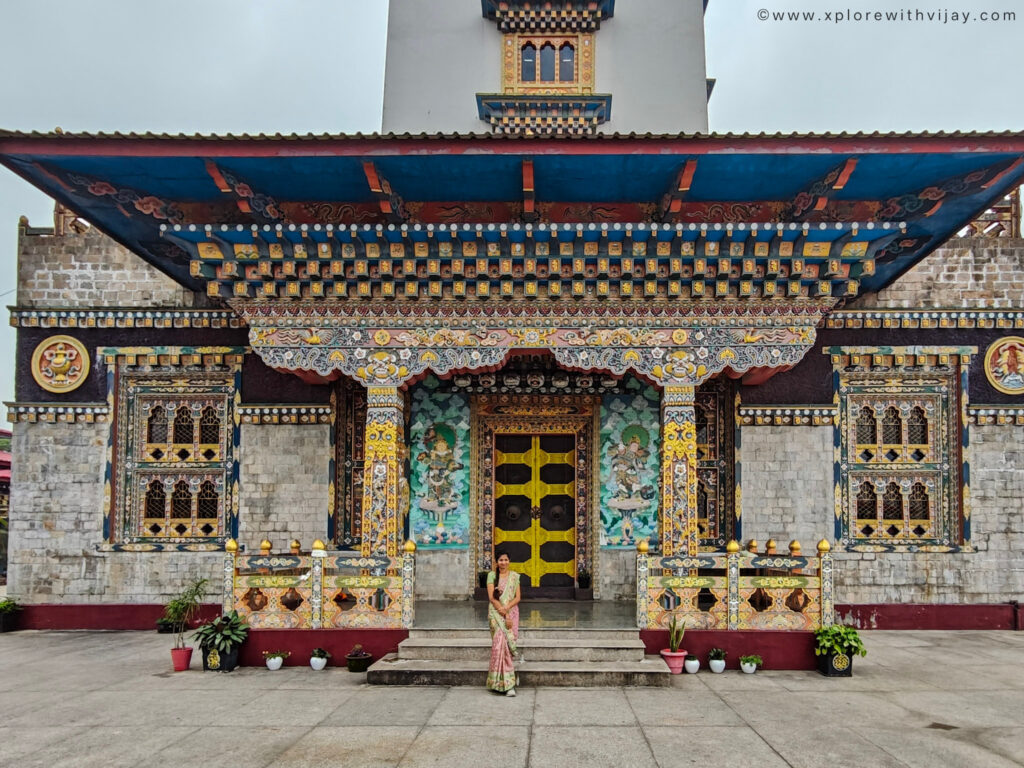
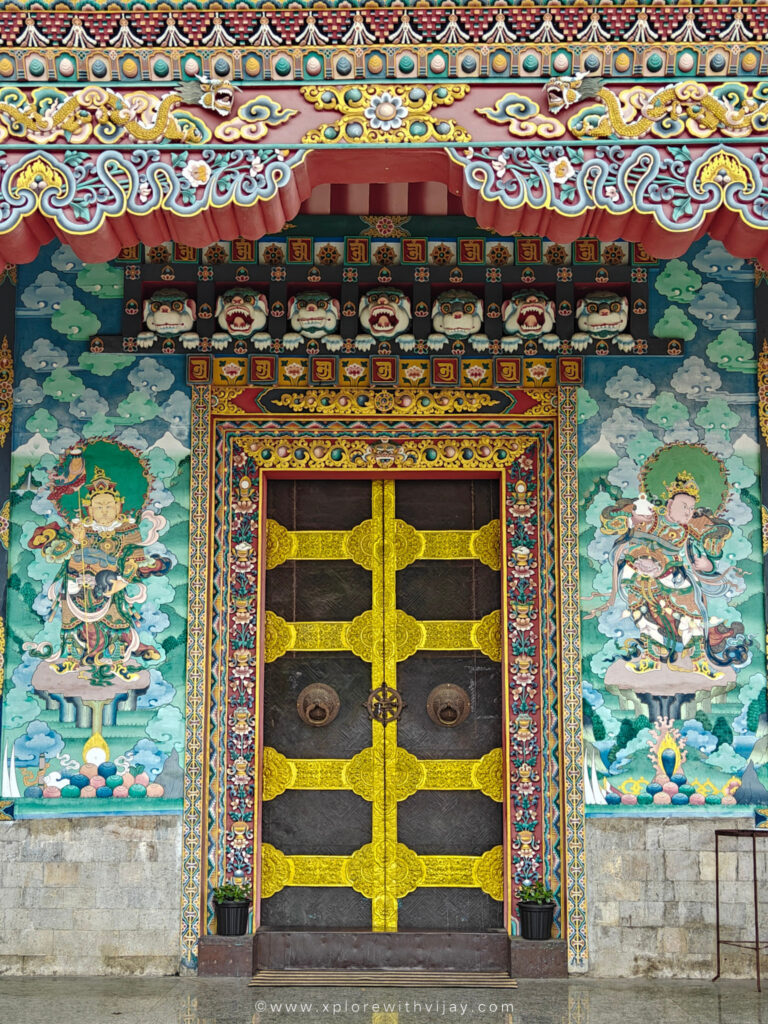
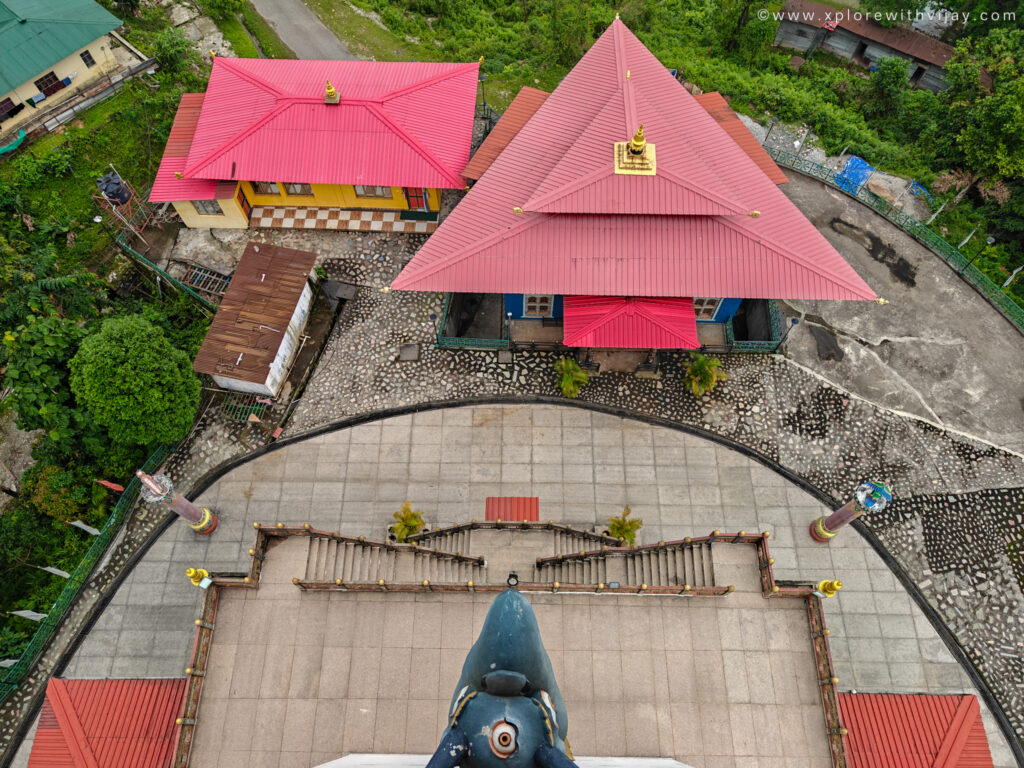
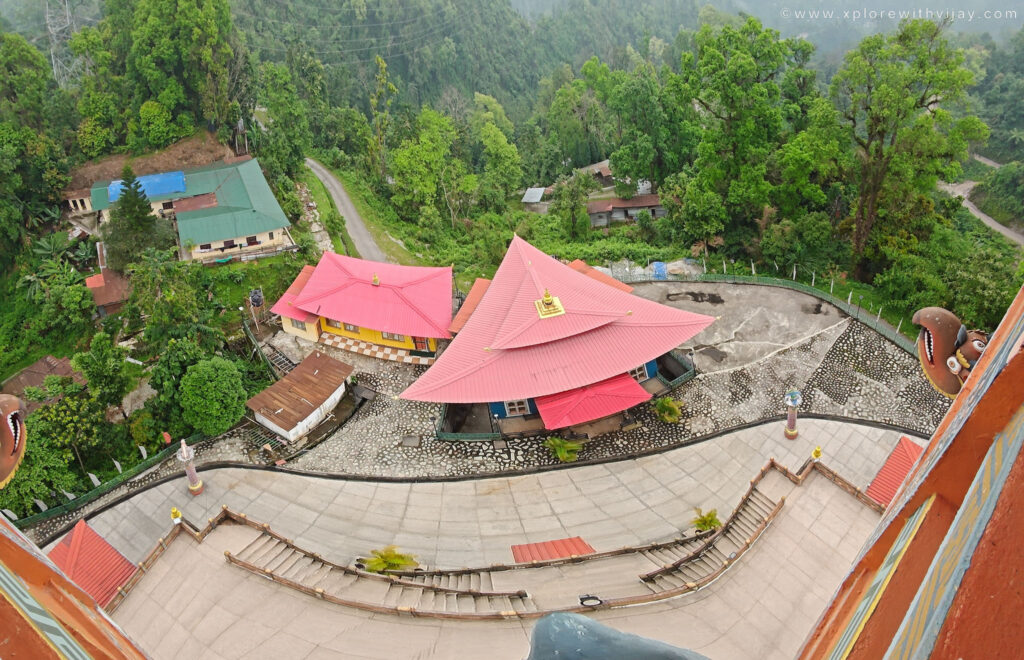
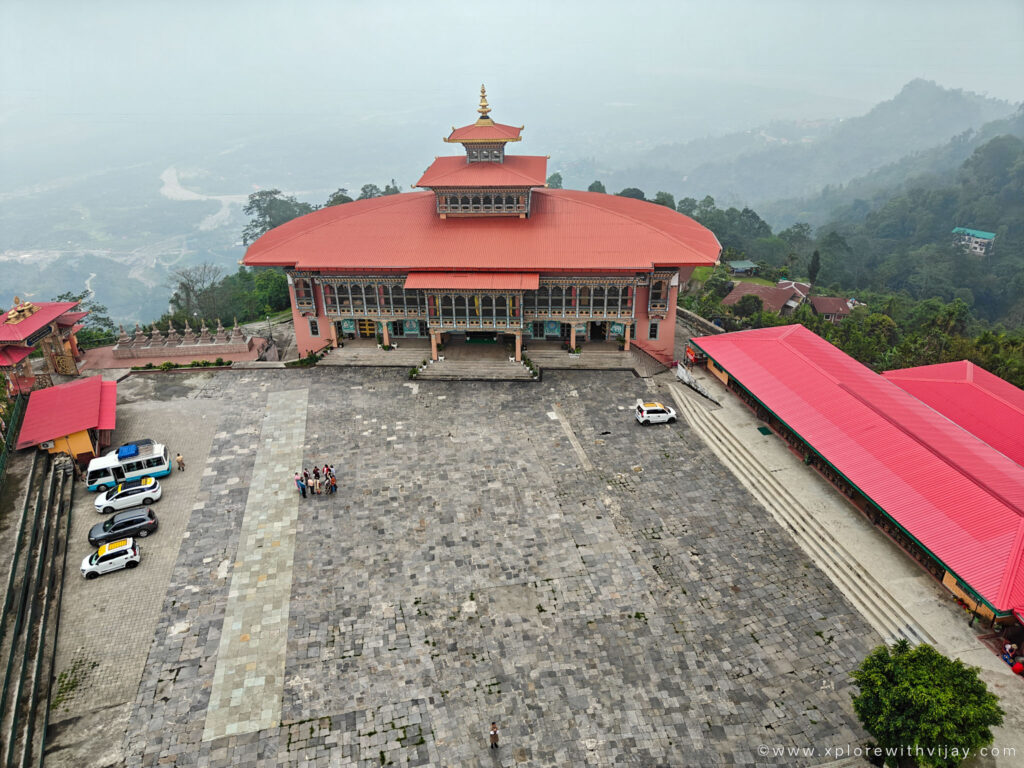
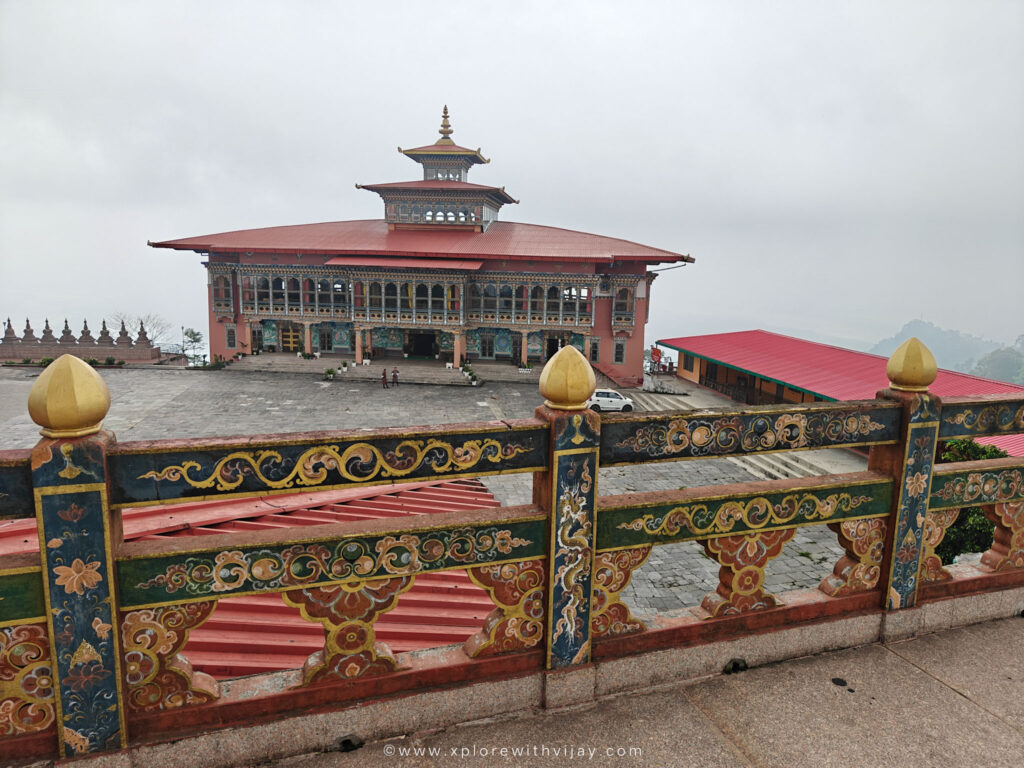
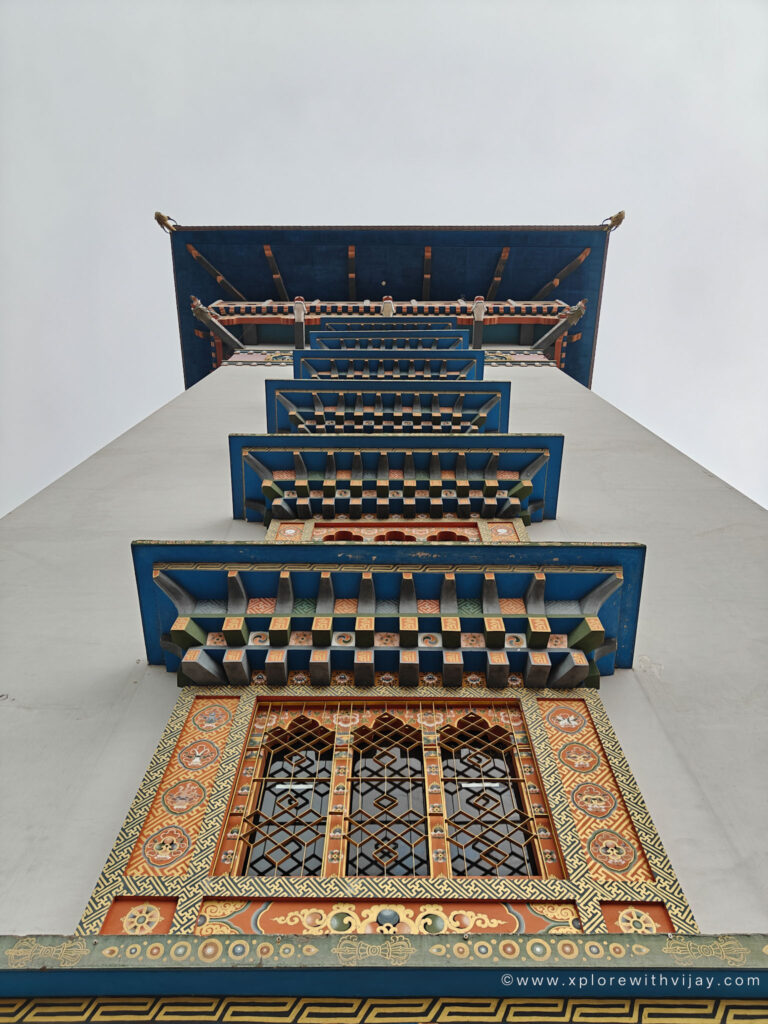
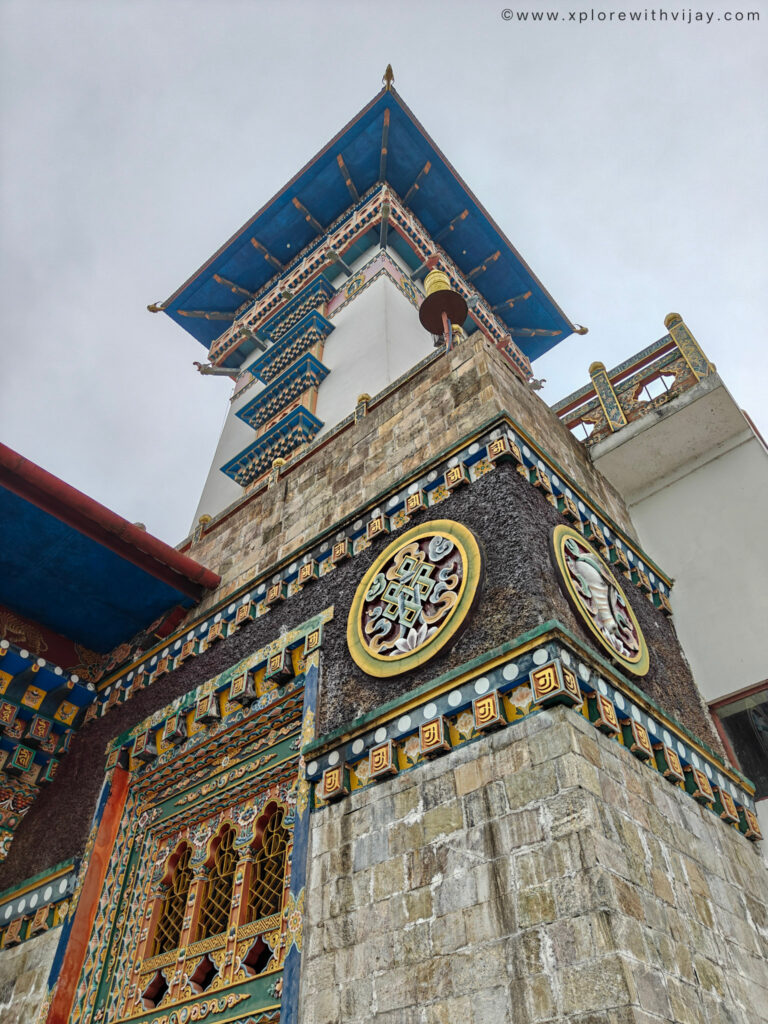
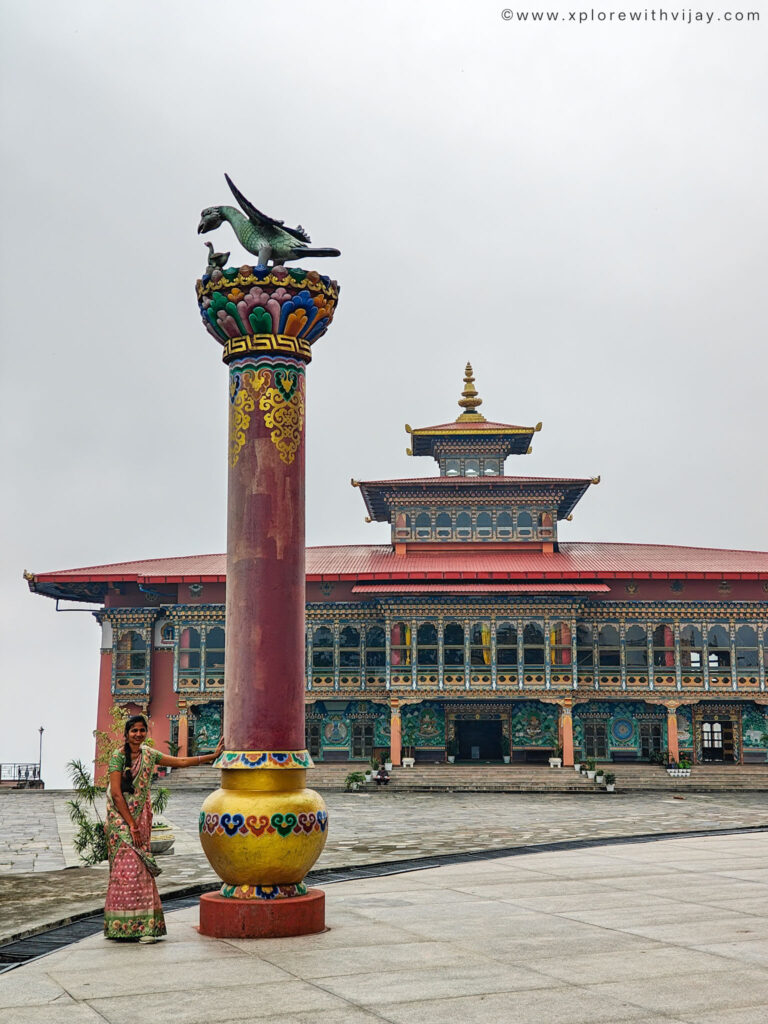
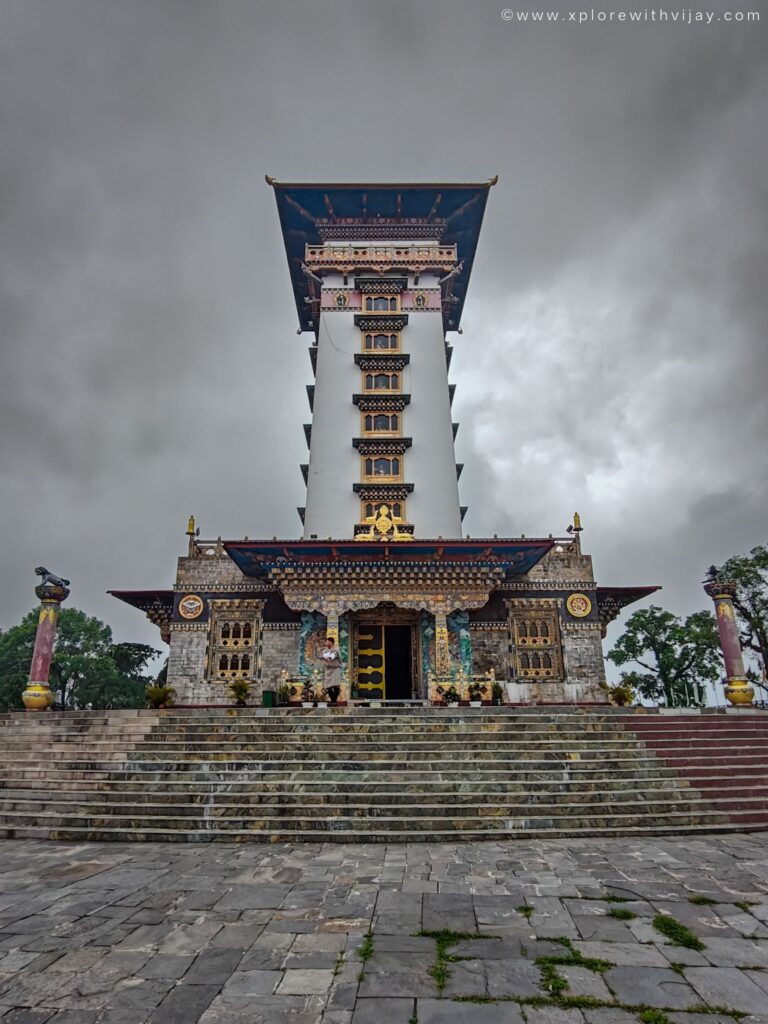
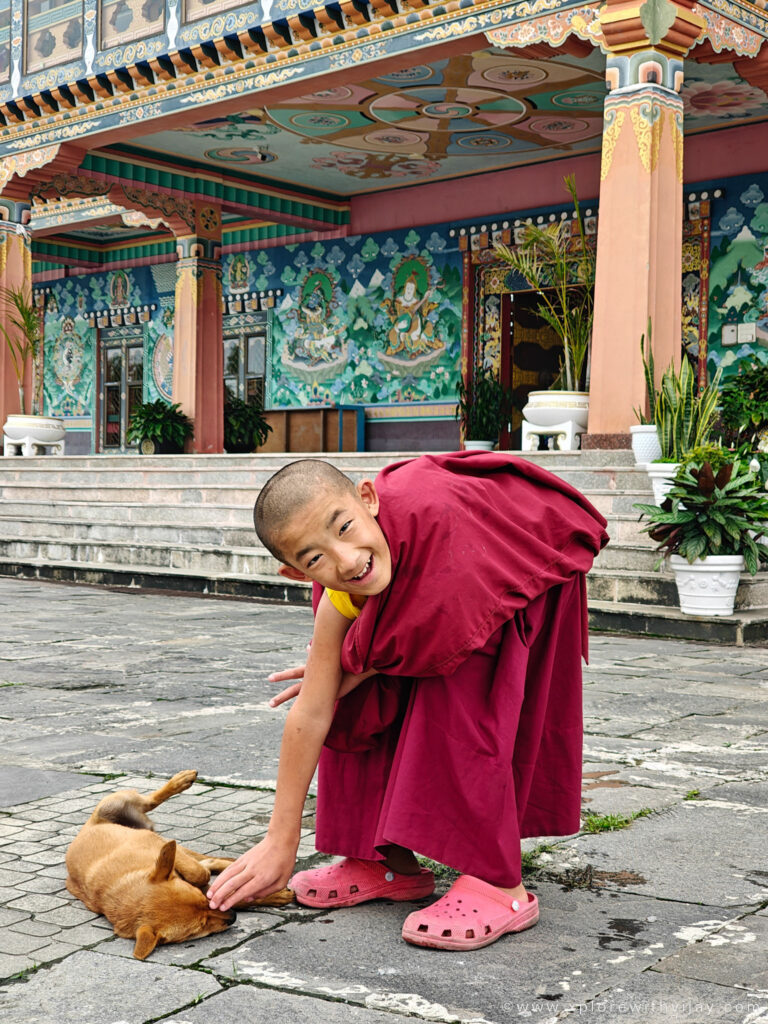
Knowing the burden of his student’s past deeds, Marpa put Milarepa through a rather unusual form of spiritual training. He instructed him to construct a nine-storey tower with his bare hands. Just when the structure was nearing completion, Milarepa was asked to dismantle it and rebuild it elsewhere. This process was repeated several times.
The arduous task was intended to help Milarepa purify his accumulated negative karma. Eventually, after years of rigorous training and devotion to his guru, Milarepa went on to meditate in mountain caves and attained enlightenment.
His life is regarded as a shining example of renunciation, perseverance, diligent spiritual practice and unwavering devotion to one’s guru.
Eight Stupas, Eight Milestones | The Life of Gautama Buddha
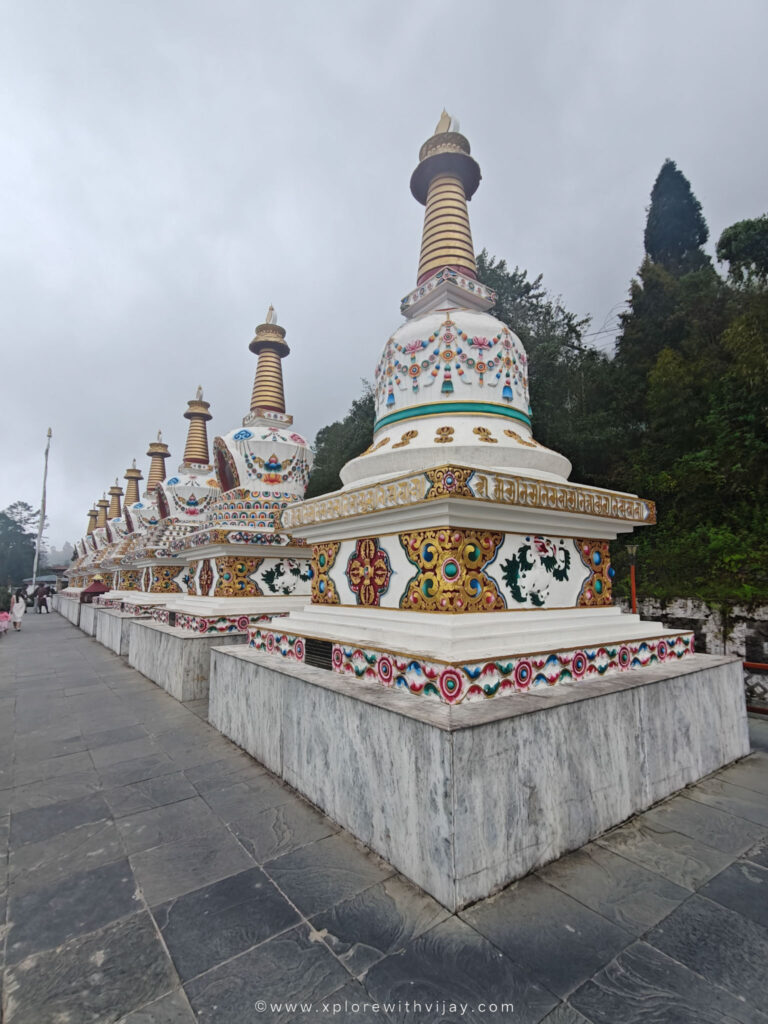
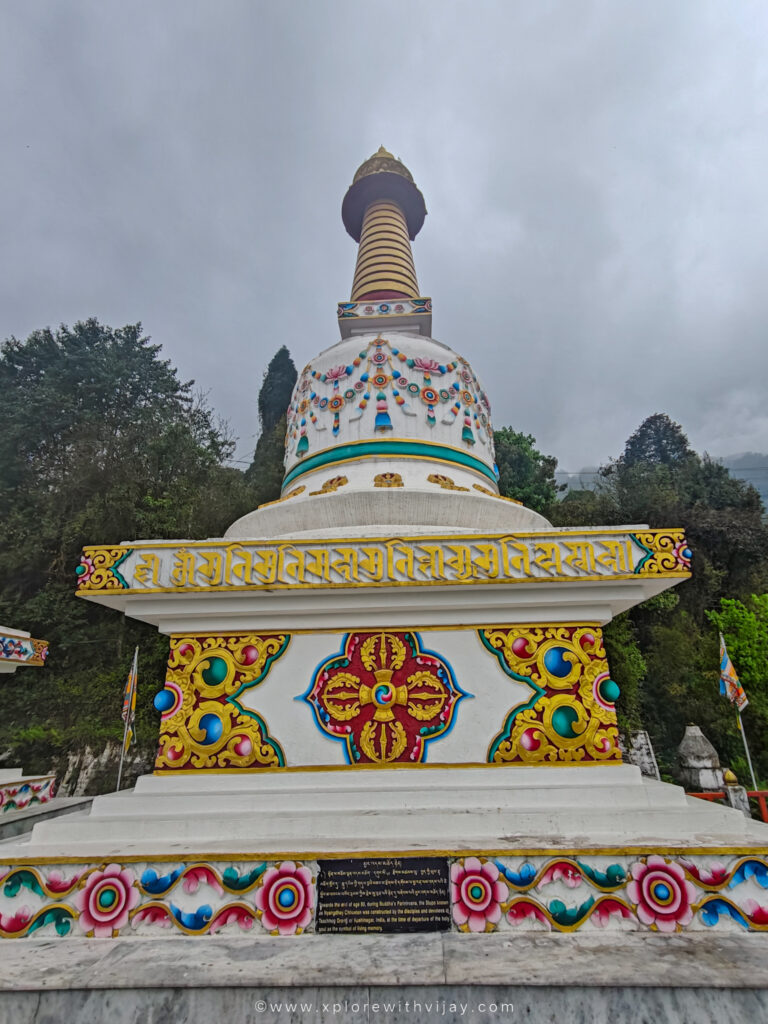
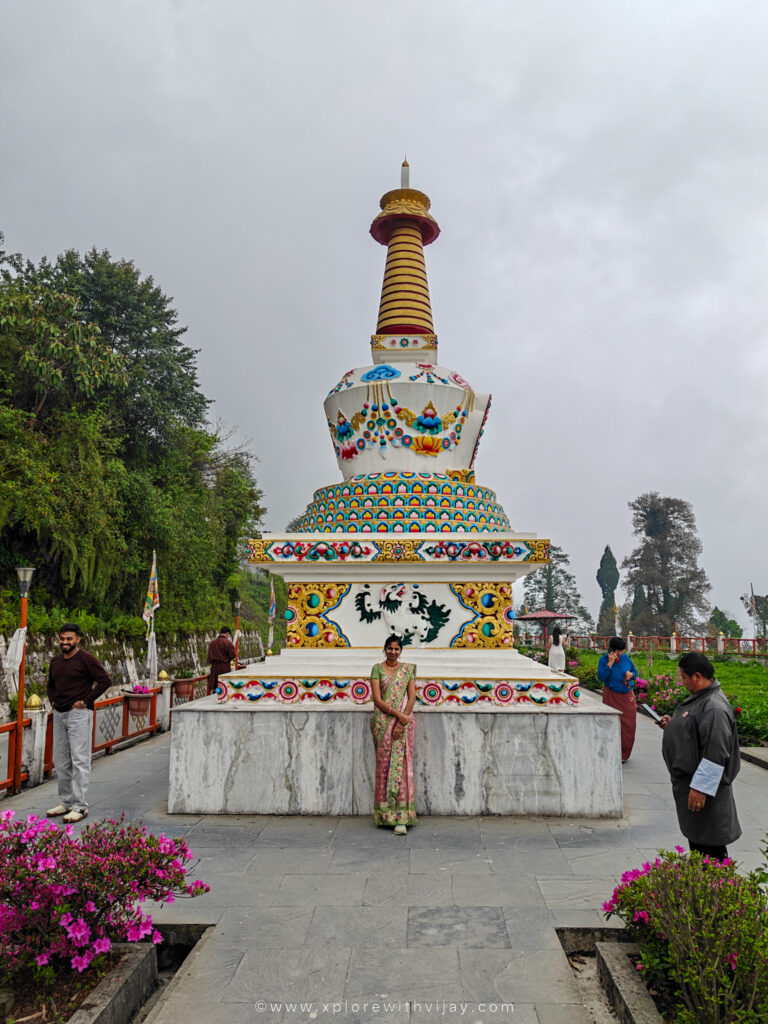
A few hours later, we arrived at another fascinating landmark – the Eight Dharma Kaya Stupas, or Chortens, in Gedu. These eight stupas symbolise eight significant events in the life of Gautama Buddha.
I am trying to recollect as much as I can of what our guide explained to us during the visit. Each of these structures represents a milestone in the Buddha’s spiritual journey:
- Lotus Blossom Stupa (Birth): Commemorates the birth of Siddhartha Gautama in Lumbini, Nepal.
- Enlightenment Stupa: Marks the attainment of enlightenment under the Bodhi tree in Bodh Gaya, India.
- Stupa of Turning the Wheel of Dharma: Represents the Buddha’s first sermon at Sarnath, where he shared the Four Noble Truths.
- Stupa of Great Miracles: Commemorates the miraculous displays attributed to the Buddha at Shravasti.
- Stupa of Descent from Heaven: Represents the Buddha’s return to the earthly realm after teaching his mother in the heavenly realm.
- Stupa of Reconciliation: Symbolises the restoration of harmony within the Buddhist monastic community following a division among its members.
- Stupa of Complete Victory: Commemorates the Buddha’s decision to prolong his life by three months to continue teaching the Dharma.
- Stupa of Parinirvana: Marks the Buddha’s final passing into Parinirvana at Kushinagar, India.
It was quite fascinating to see how each structure carried a distinct meaning, with its own place in Buddhist history and philosophy.
A Confluence Before Thimphu – Our Final Stop of the Day
By this point, we were at an altitude of approximately 6,700 feet above mean sea level. Shortly after visiting the stupas, we stopped for lunch. I must say that, with clouds enveloping the surrounding landscape, the place looked absolutely magical.
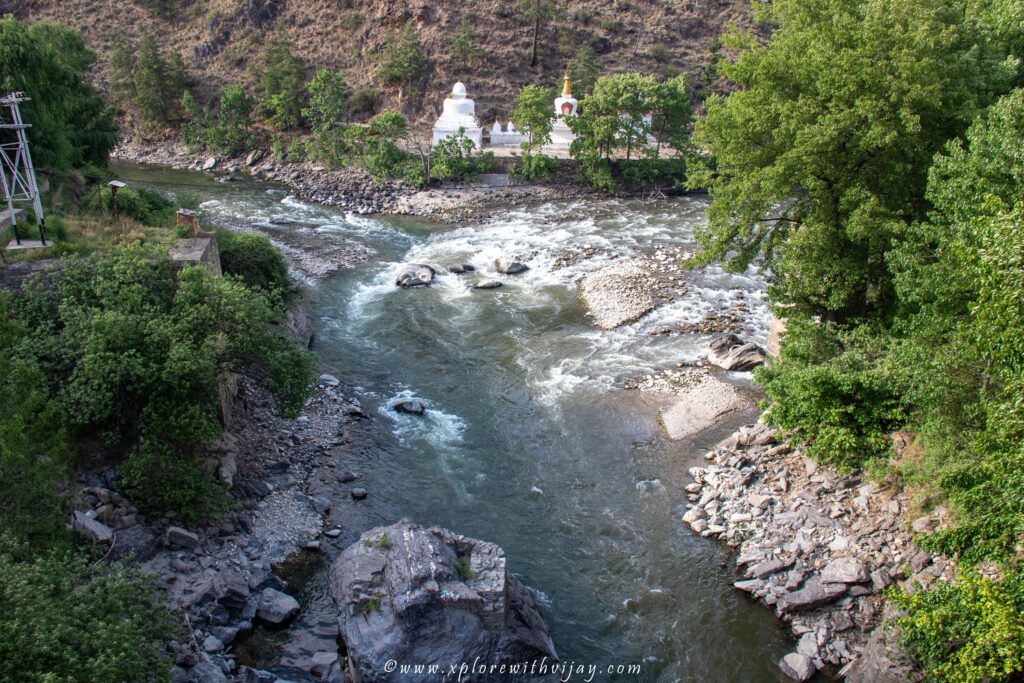
Our final stop before reaching the hotel was Chuzom, a beautiful confluence where two rivers meet. Here, the Paro Chhu, flowing from the Paro Valley, meets the Thimphu Chhu, also known downstream as the Wang Chhu. The Wang Chhu continues its journey southwards towards the Indian border.
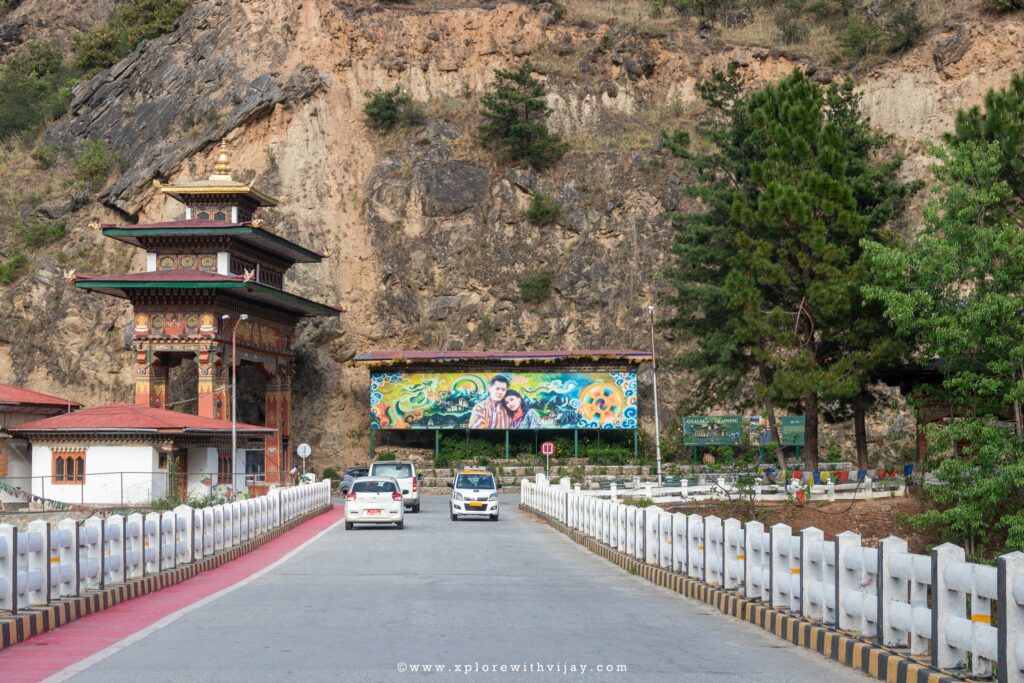
By the time we arrived at our hotel in Thimphu, it was around 5 PM. After a rather long day on the road, we were more than happy to unwind. The rest of the evening was spent enjoying the cosy ambience of our room and some delicious food at the hotel’s in-house restaurant.
And that brings us to the end of the first instalment of my Bhutan travelogue!
The next part of this series will take you further into the Himalayan kingdom, exploring its stunning landscapes, fascinating architecture and cultural experiences.
If you’ve enjoyed travelling along with us through this first leg of the journey, I’d love to hear your thoughts. Do leave a comment and share this travelogue with your family and friends who might enjoy exploring Bhutan through my lens and experiences.
Join My Community
If this journey resonated with you, I invite you to join my broadcast list for more stories and photographs from my travels.
If you enjoy social media, feel free to connect and explore more of my work through the links below.
Instagram: https://www.instagram.com/xplore_with_vijay
YouTube: https://www.youtube.com/@xplore_with_vijay/
Facebook: https://www.facebook.com/vijay8686